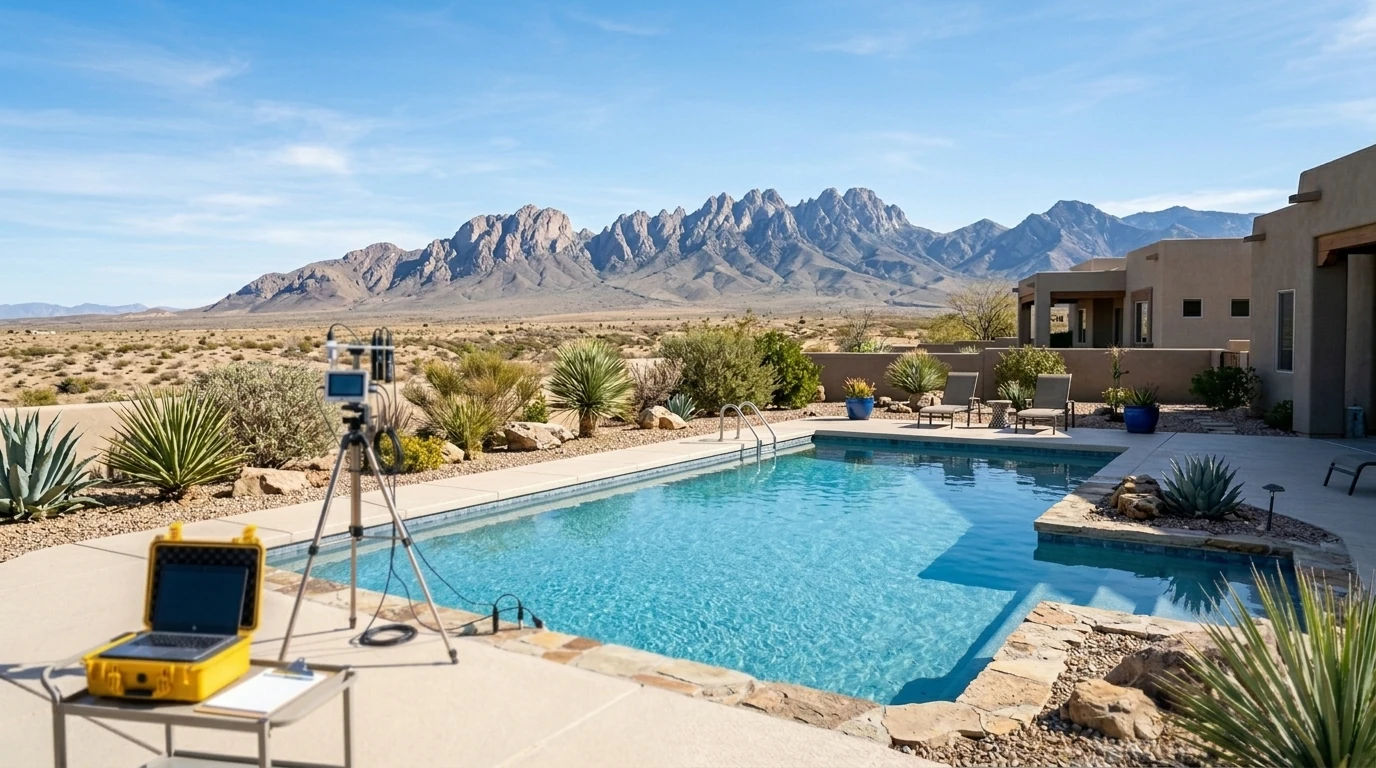
Learn the common leak sources around the skimmer, conduit, pool structure, and more. Expert pool leak detection in Las Cruces, NM.
If your pool is leaking, you are not alone. This is one of the most frequent issues pool owners deal with. The frustrating part is that problems can happen in places you would never think to look. Knowing the common places where they show up can save you time, money, and a whole lot of stress.
In this guide, we break down the common sources of pool leaks, explain what to look for, and help you figure out where to start. If you need professional help, Desert Otter Pools in Las Cruces, NM offers expert detection services to pinpoint the exact problem fast.
Why Do Pools Develop Problems?
Before we get into where issues tend to show up, it helps to understand why they develop in the first place.
Over time, the structure of the pool breaks down from sun, chemical wear, and aging. Soil movement beneath and around your pool can shift pipes, crack shells, and loosen connections. The desert heat in Las Cruces makes it worse. Temperature swings put extra stress on the shell, causing tiny cracks in the pool to grow slowly.
The bottom line? Every pool will eventually develop a problem somewhere. The key is catching it early and knowing where to look.
The Most Common Leak: The Skimmer
If you are looking for the single most common area for a leak in your pool, start with the skimmer. This is the number one issue professionals find, and there is a simple reason why.
It is where plastic meets concrete (or fiberglass). These two materials expand and contract at different rates as temperatures change. That movement creates separation and cracks right where the body connects to the wall. This is especially common in gunite pools.
Signs your skimmer may have a problem:
- Water settles at the bottom of the opening and then stops
- Visible cracks or gaps on the faceplate
- Wetness in the soil near the opening
- Air bubbles entering through the return jets
Pro Tip from Desert Otter Pools: "If your water recedes and then holds steady right at that line, that is a strong clue. Let the pool sit with the pump off and watch where the water stops. That is often the point of the leak."
A Complete Breakdown of Where Leaks Happen
While the skimmer area is the most frequent culprit, problems can happen elsewhere. Here is a detailed look at every location and what to watch for.
The Light and Conduit
The pool light is one of the most overlooked sources of trouble. Water can seep through the light niche (the housing that holds the fixture) or through the conduit, a pipe that protects the wiring and runs to the junction box. Over time the seal where it enters the wall can break down.
What to look for:
- Moisture around the junction box outside the pool
- The pool water settling right at the light level
- Small cracks around the fixture on the interior wall
Underground Plumbing Lines
Plumbing leaks are harder to spot because the pipes are buried. Your plumbing system includes suction side lines, return lines, and any lines running to water features or a spa.
Where pipe issues tend to show up:
- Where pipes connect to the pool shell at the returns
- Along any section of pipe that runs through shifting soil
- At joints and elbows where glue has weakened
- Around the pipe where it enters or exits the pad
A technician can run a pressure test on each line to identify exactly which segment has failed.
Returns and Fittings
The return jets push filtered water back. Each fitting screws into the wall, and the gasket or seal behind it can wear out. When that happens, water seeps out around the connection and into the ground.
Pool returns are a common source in all kinds of pools, from vinyl to concrete and beyond.
The Main Drain
This sits at the bottom of the pool floor and connects to the piping by buried lines. Issues here can be caused by a cracked cover, a failed seal, or a broken pipe below.
It is one of the harder areas to diagnose because it sits at the deepest point. If water falls all the way to near the floor, the drain should be one of the first suspected areas.
Shell and Structure Cracks
Surface cracks are another common source, especially in older concrete structures. These can appear on the walls, along the pool floor, or at the bond beam where the deck meets the shell.
Look for:
- Hairline cracks on the surface or plaster
- Cracks that run along the side of the pool or at steps
- Any visible separation at the tile line
In vinyl liner pools, the liner itself can develop small tears or holes that allow water to escape. Even a tiny puncture in the pool surface can cause noticeable loss. These pools should be inspected regularly for wear, especially at seams and corners.
Quick Reference: Where Problems Happen Most
Pool Equipment: Do Not Overlook the Pad
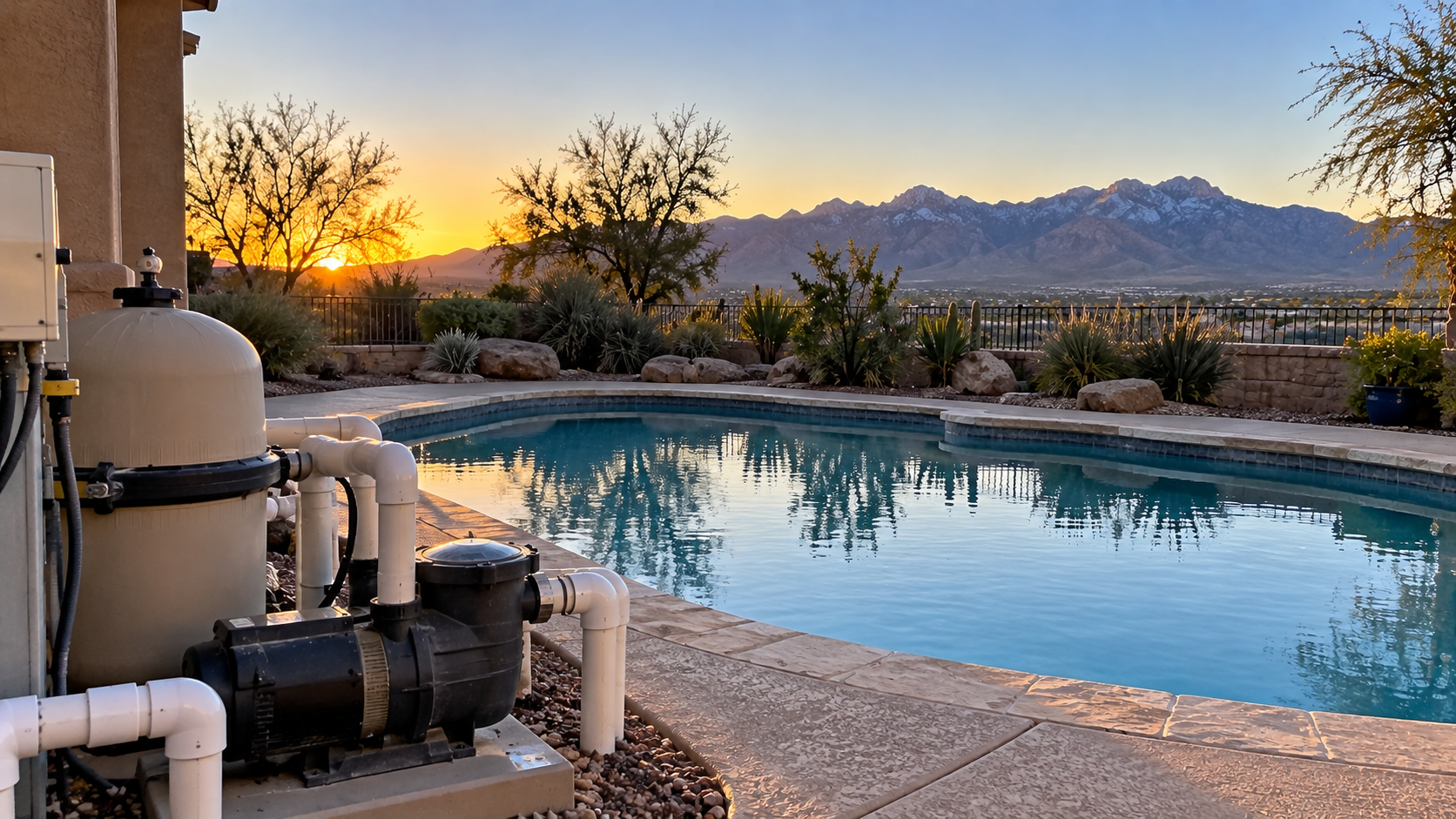
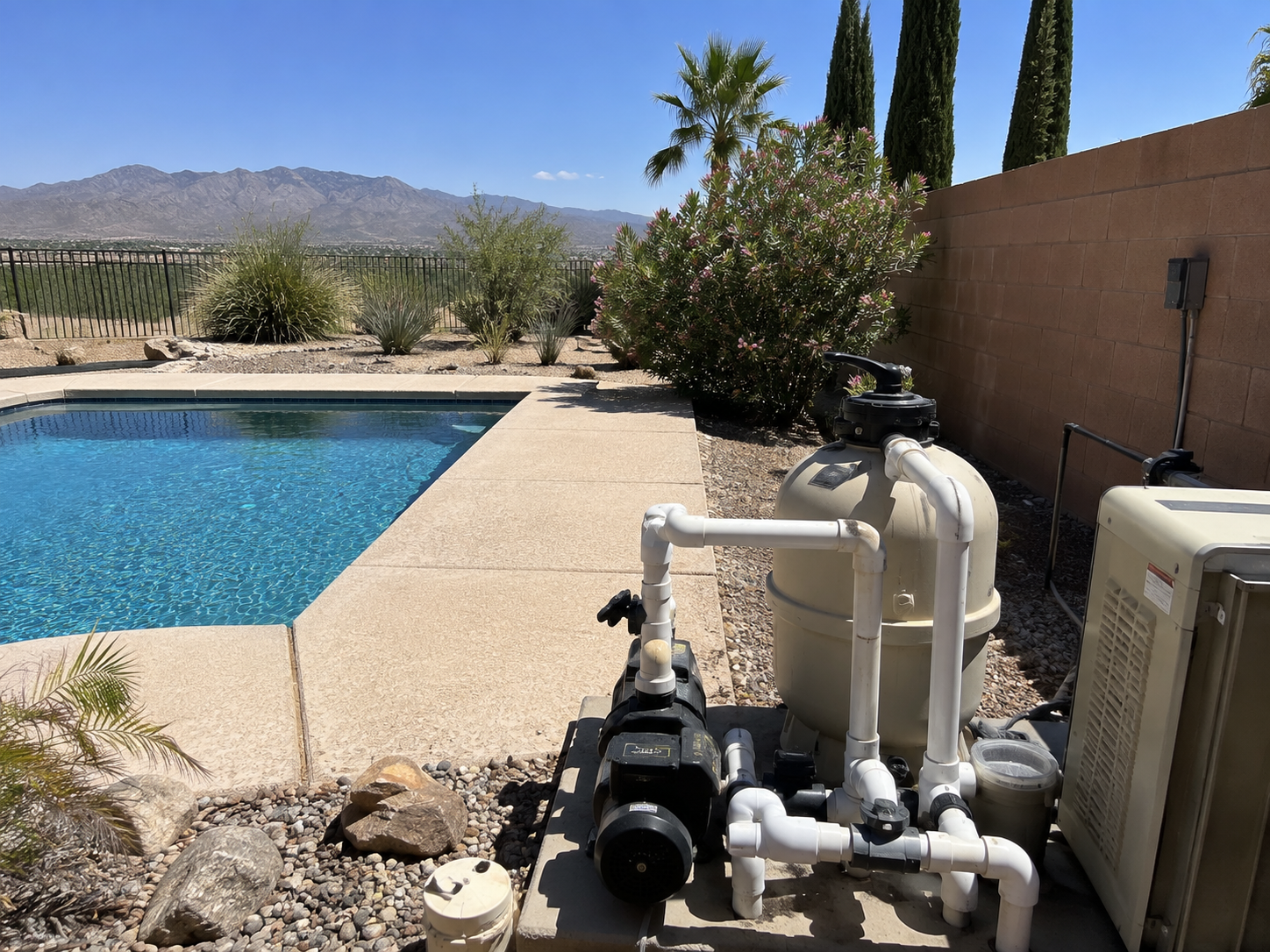
Your equipment area is another spot that many homeowners skip during a self-inspection. The pad holds your pump, filter, and all the connections that tie the system together.
Areas to inspect on the equipment pad:
- Around the pump housing. Check for drips at the lid seal and at every connection going in and out. Fittings can also leak slowly if they are not properly sealed.
- The filter tank. Multiport valve leaks are surprisingly common. Look for water dripping from the backwash line when the system is running.
- Heat exchange connections. Examine both sides. Internal exchangers can develop a small leak and may need a professional to diagnose.
- Pipe joints. Look for moisture at every joint, union, and connector. You can sometimes plug a minor drip temporarily, but a permanent fix is best left to a pro.
If you see standing water or dampness near the pump or filter and it has not rained, that is a strong sign of a problem.
Simple Tests You Can Do at Home
You do not need specialized equipment to begin narrowing down where the problem is. Here are two simple tests that can point you in the right direction.
The Bucket Test
This test tells you if your pool is actually losing water or if the drop is just from heat and wind.
- Fill a bucket and set it on a step inside the pool.
- Mark the water level inside the bucket and outside on the wall.
- Wait 24 hours with the pump off.
- If the pool level drops more than the bucket, you likely have a problem. If both drop equally, it is just the normal evaporation rate.
The Dye Test
Once you have a suspected leak location, use dye to confirm. Squeeze a small amount of leak detection dye near the openings, returns, cracks, or the light fixture. If the color gets pulled toward a spot, that is where water from the pool is escaping.
Keep the water still by turning off the pump. Apply it close to the surface and watch carefully. If it moves toward a crack or gap, you have found your potential leak.
Is It a Problem or Just Normal Water Loss?
Not every drop in water level means something is wrong. In the Las Cruces desert heat, natural water loss can account for a quarter inch or more per day. But there are clear differences.
If the bucket test confirms loss beyond what is due to evaporation, it is time to investigate further or call in a pro.
When to Call a Professional
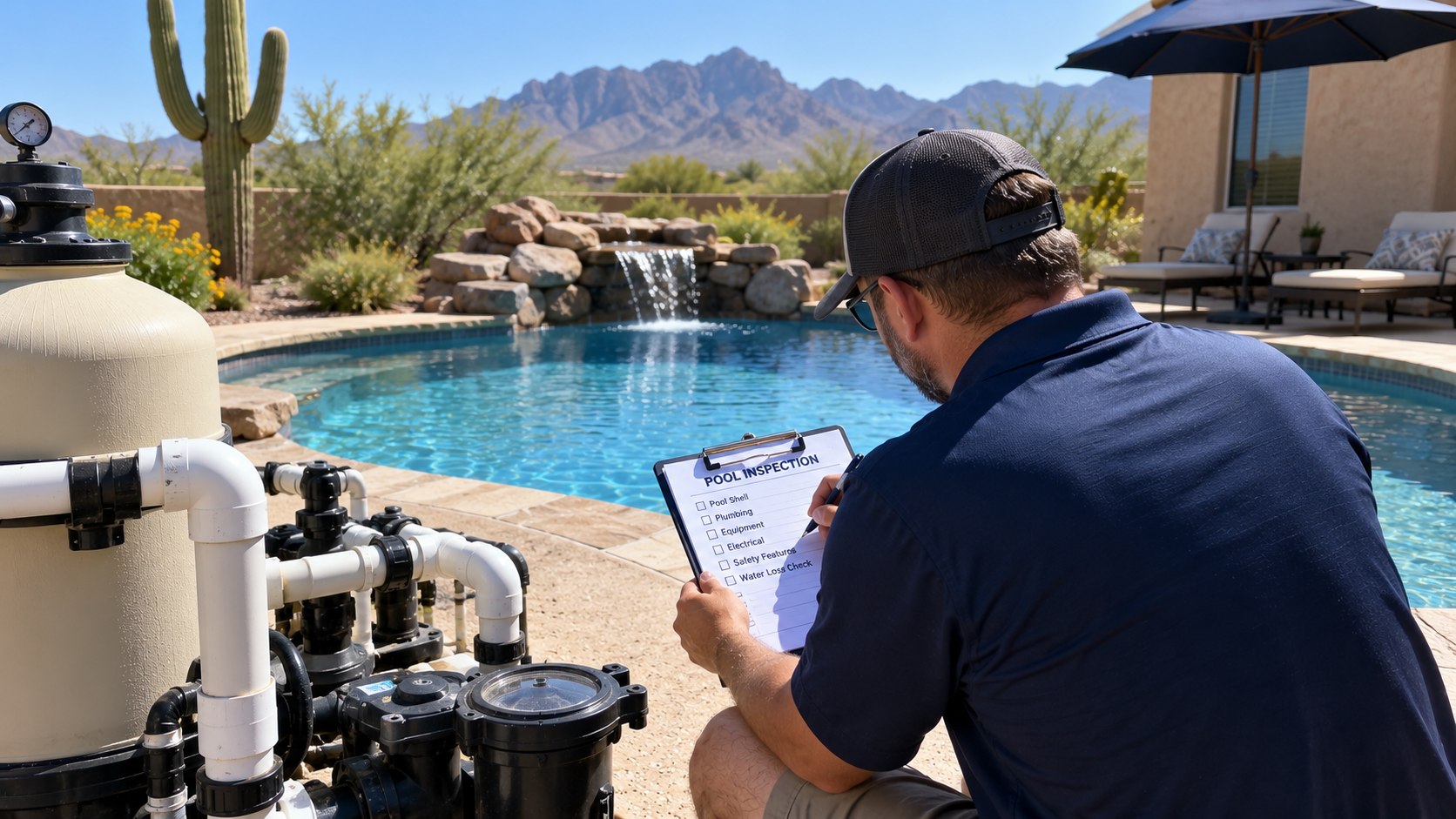
DIY tests are a great way to start. But some problems need specialized tools. It can be hard to find pool issues buried in pipes or hidden behind walls. If you have checked all the areas listed above and still cannot spot the source, a certified professional can save you from weeks of stress.
You should call for help when:
- The bucket test confirms a problem but you cannot see where
- You suspect buried plumbing is involved
- Damp areas appear in your yard but not near any visible pipe
- Your pool continues to drop even after a patch or small repair
- You need help diagnosing individual lines
Why Desert Otter Pools?
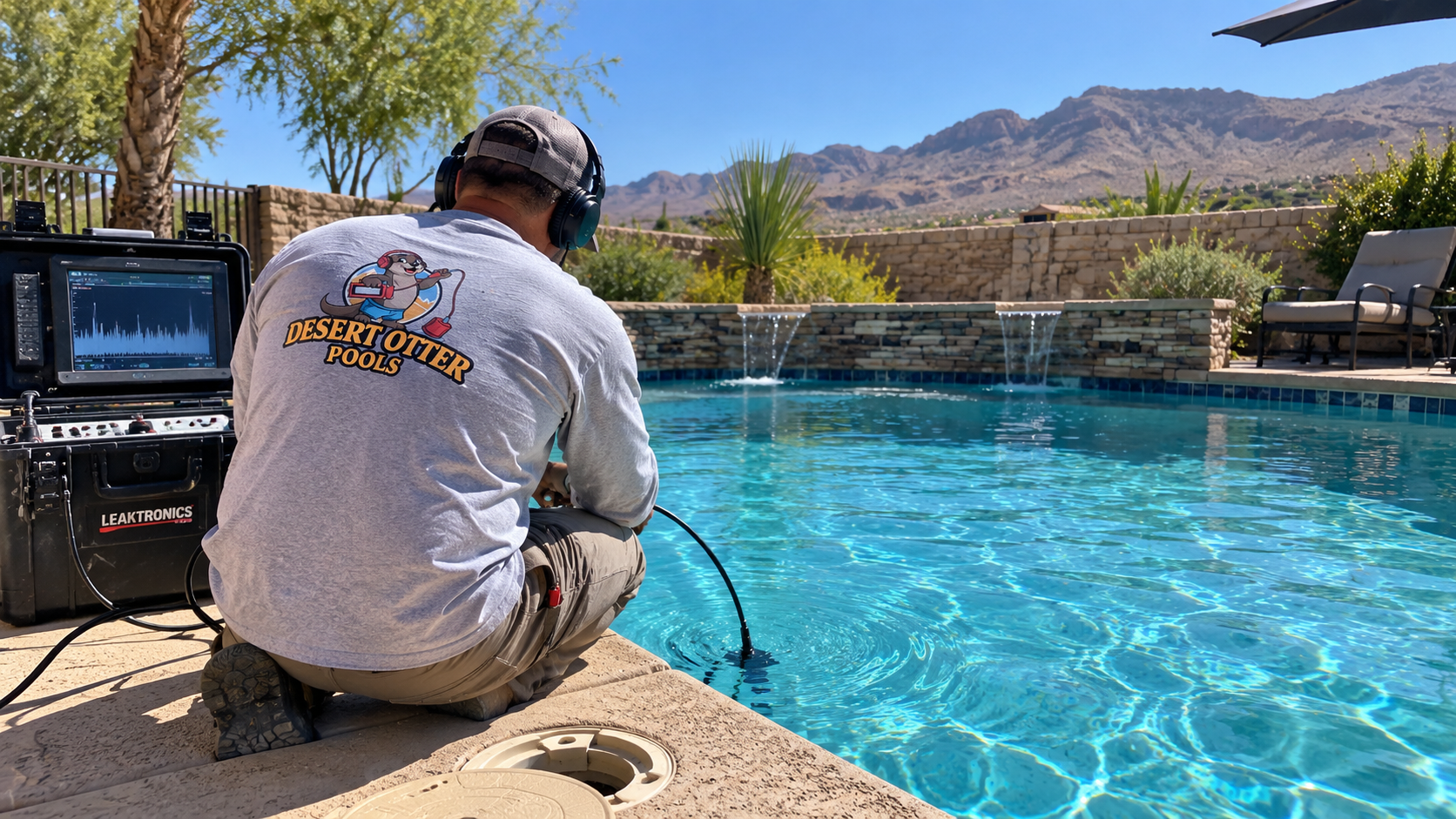
At Desert Otter Pools, we use LeakTronics equipment and listening devices to locate problems with precision. Our team is LeakTronics Certified, Watershape Construction Certified, and Fluid Engineering Certified, so you get accurate results the first time.
What we bring to every job:
- Advanced electronic detection to scan the shell, pipes, and equipment
- Non-invasive methods that avoid unnecessary digging
- Detailed reports that explain the type of leak, the location, and next steps
- Service across Las Cruces, El Paso, Chaparral, Deming, Horizon City, Sunland Park, Anthony, Alamogordo, and surrounding areas within 300 miles
We also offer leak repair, pool inspection, pool maintenance, pool service, and monthly cleaning to keep your pool and spa in top shape.
Find the Problem. Fix It. Protect Your Pool.
Every leak starts small. The sooner you identify the source, the less damage it can do to your yard and your wallet. Now that you know where issues show up most often, you can start your inspection with confidence.
Start at the skimmer first. Then inspect the light, returns, and equipment. Look for wet spots, cracks, and areas around the pool where the soil seems too soft. If you cannot pinpoint it, call the experts at Desert Otter Pools to handle it.
Call Desert Otter Pools today at (575) 219-8420 or contact us online to schedule your appointment.
Desert Otter Pools is a LeakTronics Certified, Watershape Construction and Fluid Engineering Certified pool and spa company serving Las Cruces, NM and communities within a 300-mile radius. We specialize in leak detection, repair, inspection, service, and monthly cleaning.