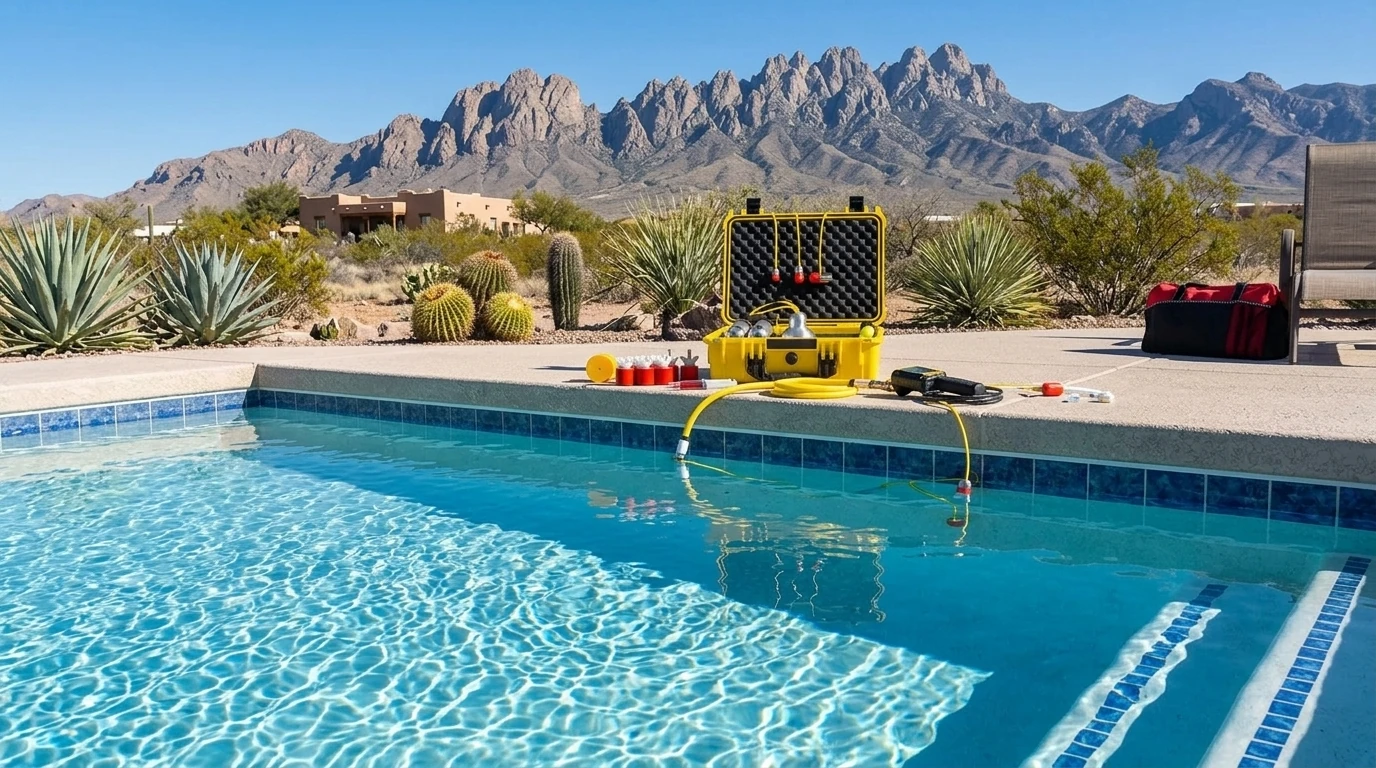
Learn how to find a pool leak using the bucket test, dye test, and more. Expert pool leak detection tips from Desert Otter Pools in Las Cruces, NM.
Is your swimming pool starting to lose water faster than it should? A leaking pool can waste thousands of gallons, spike your water bills, and cause serious damage to your backyard. The good news is that you can often find the leak yourself using a few simple tests. And when those DIY methods fall short, the certified pros at Desert Otter Pools in Las Cruces, NM are just a phone call away.
This guide walks you through how to spot the warning signs, run basic tests at home, and know when it is time to bring in an expert for pool leak detection services.
Is It Really a Leak in Your Pool, or Just Normal Water Loss?
Before you panic, know this: every pool loses some water naturally. Evaporation is completely normal, especially in hot, dry climates like southern New Mexico. On a warm, windy day, your water level can drop up to a quarter inch due to evaporation alone.
But how do you tell the difference between normal water loss and a real problem?
If your pool loses water consistently, even on cooler days with no wind, that could indicate a leak. The evaporation rate slows down when conditions change, but a real problem does not. If you are losing water due to evaporation only, you have nothing to worry about.
Common Warning Signs of a Leaking Pool
Knowing the early warning signs can help you find a pool leak before it causes major damage. Watch for these red flags:
- Your water level drops fast. If you are refilling more than once a week, something is wrong.
- Unexplained rise in water bills. Even a small leak adds up over time.
- Wet spots around the pool. Look near your skimmer, the equipment pad, and along the pool wall. Damp or soft soil outside the pool means there's a leak somewhere.
- Air bubbles in the return lines. Bubbles coming from your jets could signal a plumbing leak on the suction side.
- Cracks in the shell. Visible cracks in a concrete pool, gunite pool, or along the bond beam are common places for problems to start.
- Algae growth despite regular pool care. When water escapes, chemicals get diluted. This makes algae harder to control.
- Your pump loses prime. If it keeps losing suction, there may be an issue near the skimmer.
Pro Tip from Desert Otter Pools: "If you suspect a leak, do not wait. A small leak today can turn into a costly repair tomorrow. Early detection saves you time, money, and water."
Step 1: Try the Bucket Test to Confirm Water Loss
This method is the easiest way to figure out if your pool is losing water because of evaporation or an actual problem. Here is how using the bucket test works:
- Fill a plastic bucket about three quarters full with pool water.
- Place it on the second step of your pool so that it sits partially in the water.
- Mark the water level on the inside and on the outside.
- Turn off your pool pump, auto fill, and any water features.
- Wait 24 hours.
- Compare the two marks.
How to read the results:
- If the pool level dropped more than the water inside, that means there's a leak.
- If both levels dropped at about the same rate, you are likely just dealing with normal water loss from heat and wind.
This simple test is a great first step of your investigation, but it only tells you if there is a problem. It does not tell you where to look.
Step 2: Use a Dye Test to Find the Leak
Once you have confirmed water loss, the next step is to narrow down the location. The dye test is a simple and effective method to find exactly where the issue is.
How to run it:
- Shut off the pump so the water is perfectly still.
- Get a bottle of leak detection dye (also called leak finder dye). You can find these at most supply stores.
- Swim or wade to the area where you suspect trouble.
- Squeeze a small amount near the suspected spot, such as a crack, a loose connection, or near the jets.
- Watch carefully. If there is an opening at that spot, the colored water will get pulled toward it.
It works best in calm, still water. Even a small current from wind can mess up your results. Try this on a calm day and move slowly so you do not disturb the pool water.
Where to check first:
- Around the skimmer faceplate
- Near the main drain
- Around loose connections
- Near the pool light housing
- Along any visible cracks in the wall
- At every step of your pool
- Along the seams of the liner
If you have a vinyl liner pool, look for tears, wrinkles, or areas where it has pulled away from the wall. A leak in your vinyl liner can often be fixed with a vinyl patch kit and some waterproof tape as a temporary patch.
Step 3: Check the Equipment and Pipes
Not all problems happen inside the water. Many pool owners are surprised to learn that leaks can often start in the pipes or the equipment area.
What to inspect:
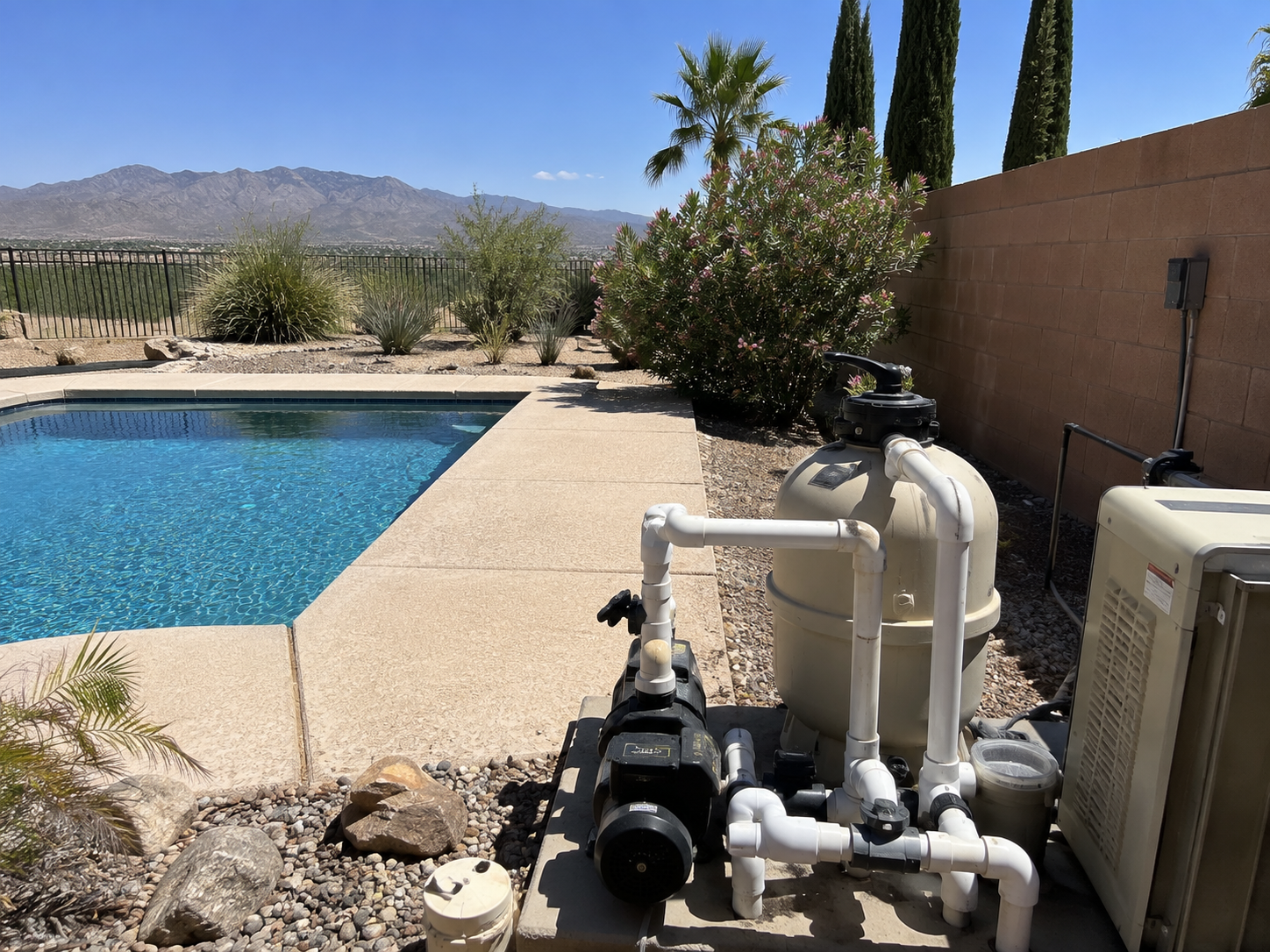
- The pump and filter. Look for drips, puddles, or moisture around all connections.
- The skimmer box. Cracks where it joins the wall are a common source of issues.
- Visible pipe connections. Check every joint for signs of moisture or dripping.
- The drain line. Underground pipe issues are harder to spot, but a sudden drop when the pump is running can point to a problem.
- The heater (if you have one). Connections going in and out can develop slow drips over time.
If you see standing water near any equipment and it has not rained, you may have found the source. Check the ground carefully around the pad and along any exposed piping.
Step 4: The Pump On/Pump Off Test
This test helps you figure out if the problem is in the shell or the underground plumbing.
- Mark your current pool water level with tape or a pencil.
- Run the pump for 24 hours and measure how much water drops.
- Then shut off the pump for 24 hours and measure again.
How to read the results:
- More loss with the pump ON: The issue is likely in the pressurized pipes or the return lines.
- More loss with the pump OFF: The issue is probably in the shell, along the walls, or at the drain.
- Same rate either way: It may be in the structure itself, such as a crack in a concrete pool or a tear in the liner.
This test gives you a clear direction before you start digging or reach out to a pro.
When to Call a Professional for Pool Leak Detection
Some issues are easy to spot. Others hide deep in buried pipes or behind walls. If you have tried the tests above and still cannot find the leak, it is time to bring in an expert.
You should reach out to a pro when:
- You cannot find any visible damage
- You suspect an underground plumbing leak
- Your inground pool keeps losing water even after a DIY patch
- The problem seems to stop and start, which can happen when the pool settles
- You want a pressure test done to rule out potential leaks
Why Choose Desert Otter Pools?
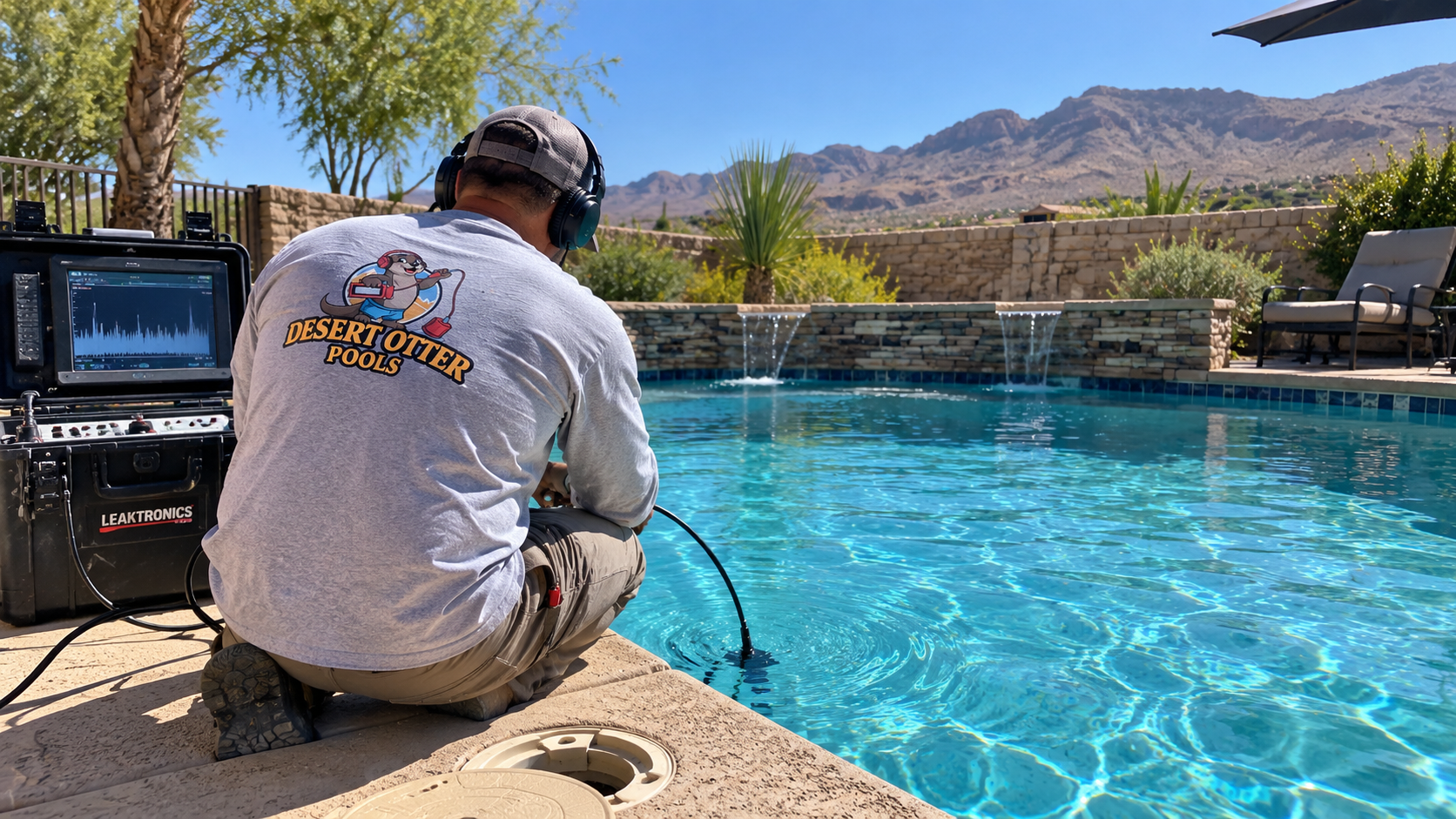
At Desert Otter Pools, we use advanced LeakTronics equipment to find problems that the naked eye cannot see. Our certified technicians can detect issues in the shell, the pipes, the skimmer, the drain, and all equipment without tearing up your yard.
What sets Desert Otter Pools apart:
- LeakTronics Certified for precise, non-invasive pool leak detection
- Watershape Construction and Fluid Engineering Certified professionals
- Serving Las Cruces, NM and surrounding areas including El Paso, Chaparral, Deming, Horizon City, Sunland Park, Anthony, and Alamogordo
- Coverage up to 300 miles from Las Cruces
- Detailed reports so you know exactly where the issue is and how to resolve it fast
Common Places Where Leaks Hide
Knowing the most common locations can save you time. Here is a quick breakdown:
How to Fix Pool Issues: Quick DIY Repairs vs. Professional Solutions
If you managed to find a leak, here are some options depending on the type of damage:
DIY fixes for minor issues:
- Vinyl liner tear: Use a vinyl patch kit with waterproof tape or adhesive. Apply the patch underwater for best results.
- Small crack near the skimmer: Underwater epoxy can work as a temporary patch.
- Loose fitting on equipment: Tighten joints and replace worn O-rings.
When to call Desert Otter Pools to fix pool problems:
- Cracks in a gunite pool or concrete structure
- Buried pipe issues
- Problems at the drain or deep in the pool wall
- Any situation you cannot safely repair on your own
- A previous repair that did not hold and the pool stops leaking only to start again
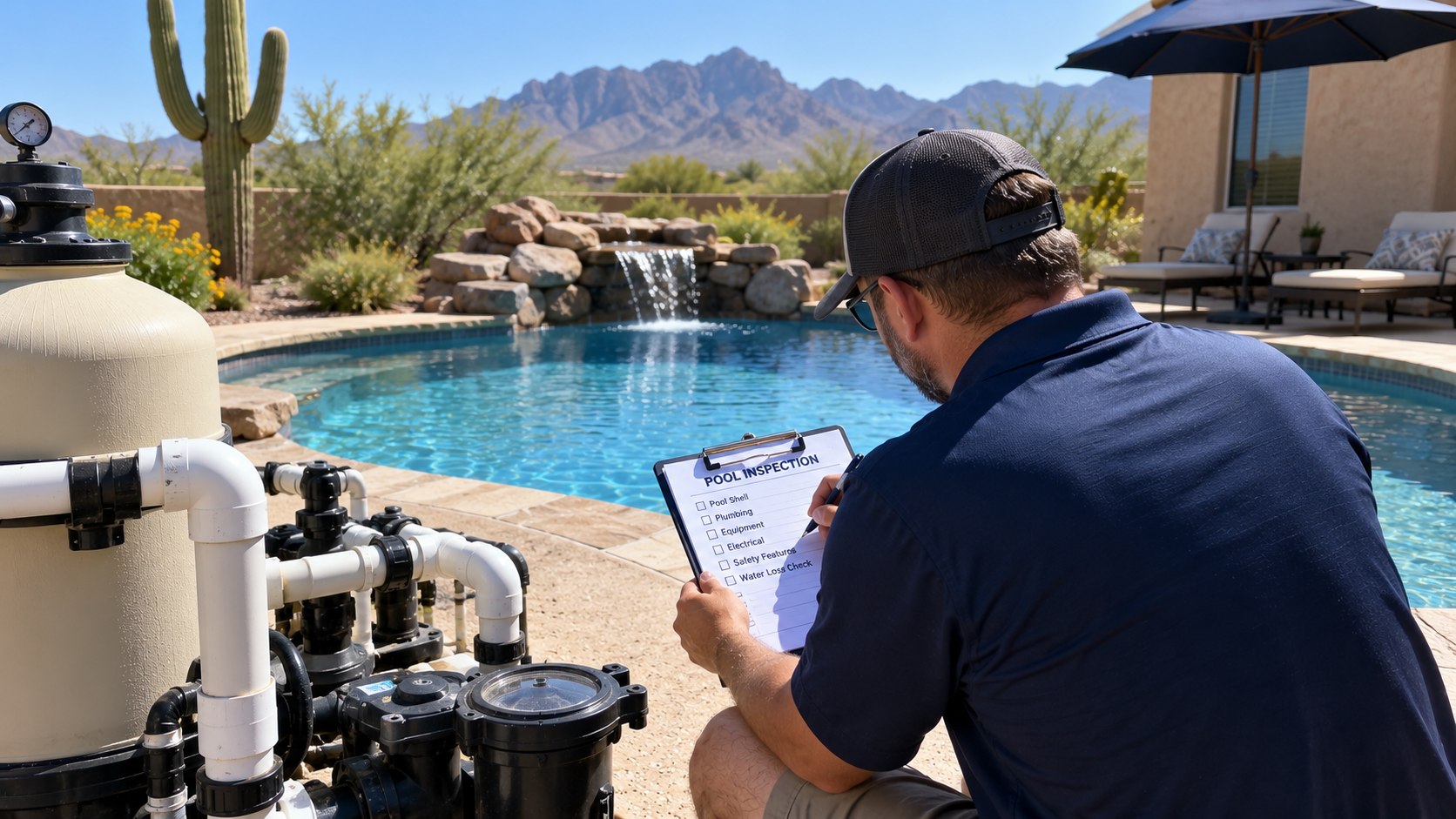
Desert Otter Pools offers complete leak repair services to handle everything from simple patch jobs to complex work. We also provide pool inspection, pool maintenance, and monthly cleaning to help prevent leaks in the future.
Prevent Problems Before They Start
Dealing with a leak is stressful, but regular pool maintenance goes a long way in preventing issues from happening. Here are some tips every pool owner should follow:
- Schedule regular inspections. Catching small cracks before they grow can save you thousands.
- Keep your water chemistry balanced. Poor chemistry can corrode parts, damage the liner, and eat away at concrete.
- Watch your water level. If you notice faster-than-normal drops, act quickly.
- Do not ignore damp ground around your pool. Soft, soggy soil near your pool is a warning sign.
- Maintain your equipment. A well-maintained pump, filter, and skimmer last longer and develop fewer issues. Equipment leaks are easier to prevent than to repair.
Stop the Problem. Save Your Pool. Call Desert Otter Pools Today.
Finding where your pool is leaking does not have to be overwhelming. Start with the bucket test, move on to the dye test, and check the ground around your pool and equipment. If the issue still hides from you, the experts at Desert Otter Pools have the tools and training to find it fast.
Whether you need help with a pool and spa issue, a stubborn problem with your pipes, or you just want peace of mind from a professional inspection, our team is ready to help across Las Cruces, El Paso, and all surrounding communities.
Ready to find and repair the leak for good?
Call Desert Otter Pools today at (575) 219-8420 or contact us online to schedule your appointment.
Desert Otter Pools is a LeakTronics Certified, Watershape Construction and Fluid Engineering Certified pool and hot tub care company serving Las Cruces, NM and communities within a 300-mile radius. We specialize in leak detection, repair, inspection, service, and monthly cleaning.