Is your pool losing water too fast? Learn the normal vs. alarming causes of water loss, how to spot a pool leak, and when to call a pro.
If you notice that your pool water level is dropping by 2 inches a day, something is wrong. That amount of water loss is far beyond normal, and it usually points to a leak in your pool, plumbing, or equipment.
Losing water at that rate can waste hundreds of gallons every day. That drives up your water bill, throws off your chemistry, and can damage the pool structure over time. The good news? You can often figure out the cause yourself before calling a pro.
In this guide, we cover the normal causes of water loss in a pool, explain how to find out if your pool has a problem, and share pool care tips. If your pool is losing water due to a hidden issue, Desert Otter Pools in Las Cruces, NM is ready to help.
How Much Pool Water Loss Is Normal?
Not all drops in level mean you have a problem. Pools can lose water through evaporation, splash out, and backwash. The key is knowing how much is too much.
Normal ranges:
- In hot, dry climates like southern New Mexico, pools typically lose about a quarter inch of water a day to evaporation. On very hot, windy days, that number can climb closer to half an inch.
- Over a week, that adds up to roughly 1 to 2 inches total. Water loss can vary based on wind, humidity, and sun exposure.
- Splash out from swimming and play can add to the total, but it is usually minor.
When it is a problem:
- Losing 2 inches per day is roughly 4 to 8 times the normal rate. That kind of drop almost always means there is a leak somewhere.
- If you need to add water more than once a week just to keep the level right, take it seriously.
Pro Tip from Desert Otter Pools: "If your swimming pool is losing water faster than a quarter inch per day, do not wait. The longer an issue goes unfixed, the more it can hurt things."
Evaporation or a Leak? How to Tell the Difference
The first step is to figure out if the drop is from evaporation or something more serious. Swimming pool water evaporation varies based on water temperature, wind, humidity, and whether you use a cover. But a simple test can give you a clear answer.
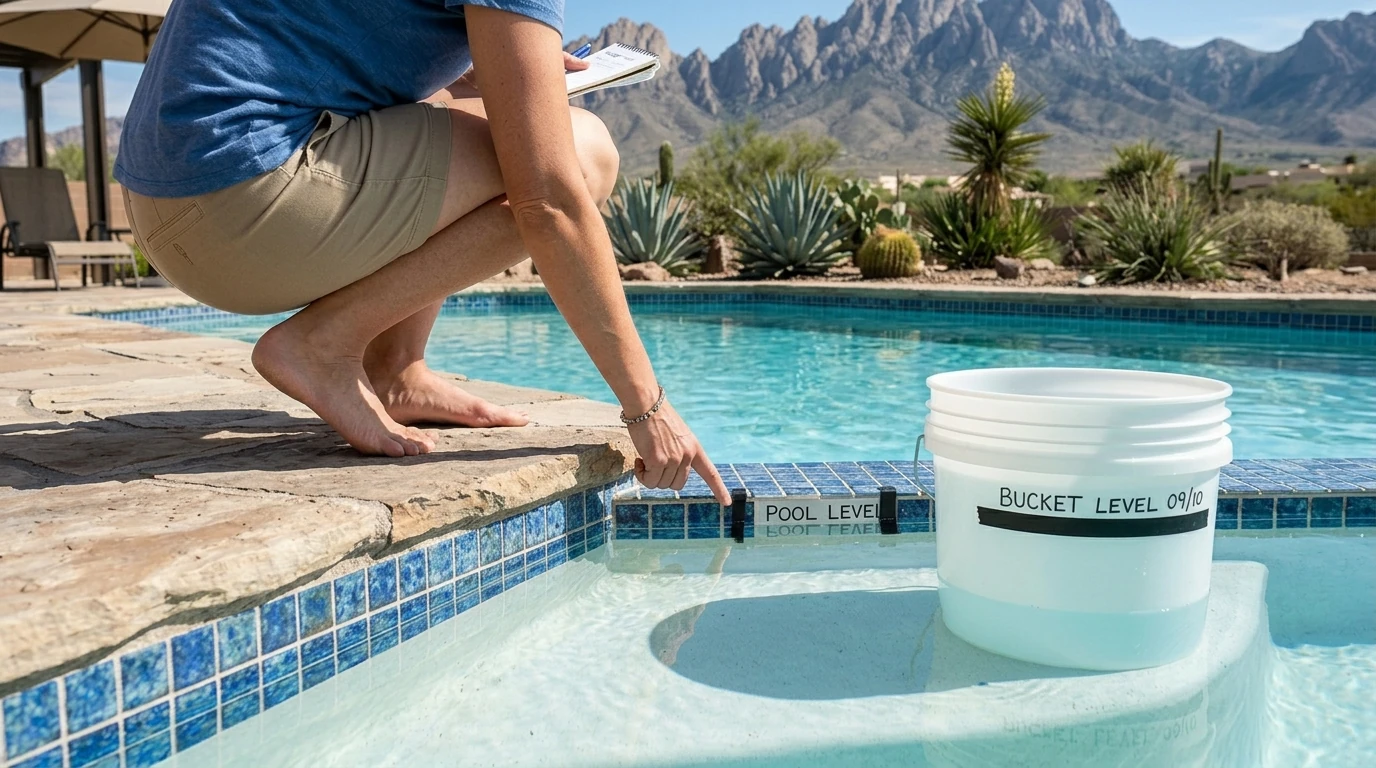
The Bucket Test
This is the easiest way to figure out if your pool is actually losing water to a leak or just to natural causes.
Here is how it works:
- Fill a bucket about three quarters full with water from the pool.
- Place it on the top step so it sits partially submerged.
- Mark the water level inside the bucket with tape or a marker.
- On the outside, place a water marker outside the bucket at the current level.
- Turn off the pump and any features.
- Wait 24 hours.
- Compare the two marks.
Reading the results:
- If the pool dropped more than the water level in the bucket, you likely have a leak. Both marks should drop at the same rate if natural loss is the only factor.
- If both dropped about the same, your pool is likely just losing water due to evaporation and nothing else.
This works because the water in the bucket and the water in your pool are both exposed to the same sun, water and heat conditions. If one drops faster, something else is causing water to leave.
Common Reasons Your Pool Loses Water
If that test confirms that there is more than normal going on, here are the most likely causes.
Plumbing Issues
Underground pipes can crack, separate at joints, or develop slow drips over time. You may not see any sign at the surface, but the level will keep dropping. If the loss gets worse when the pump is running, it often points to a pressure side issue in the plumbing.
Skimmer Separation
The skimmer is one of the most common spots where water escapes. Over time, the bond between the skimmer body and the pool wall can crack from ground shifting or temperature changes. If the level drops and then holds right at the skimmer opening, that is a strong clue.
Cracked Shell or Walls
Hairline cracks in the pool walls or floor can cause water to seep into the surrounding soil. This is more common in older shells made of concrete or gunite. Even a small crack can cause your pool to lose a surprising amount of water per day.
Light Fixture and Conduit
The area around the pool light is another spot where water leaks out. The conduit (the pipe from the light to the junction box) can lose its seal. If the level seems to settle right at the light, that is worth investigating.
Equipment Problems
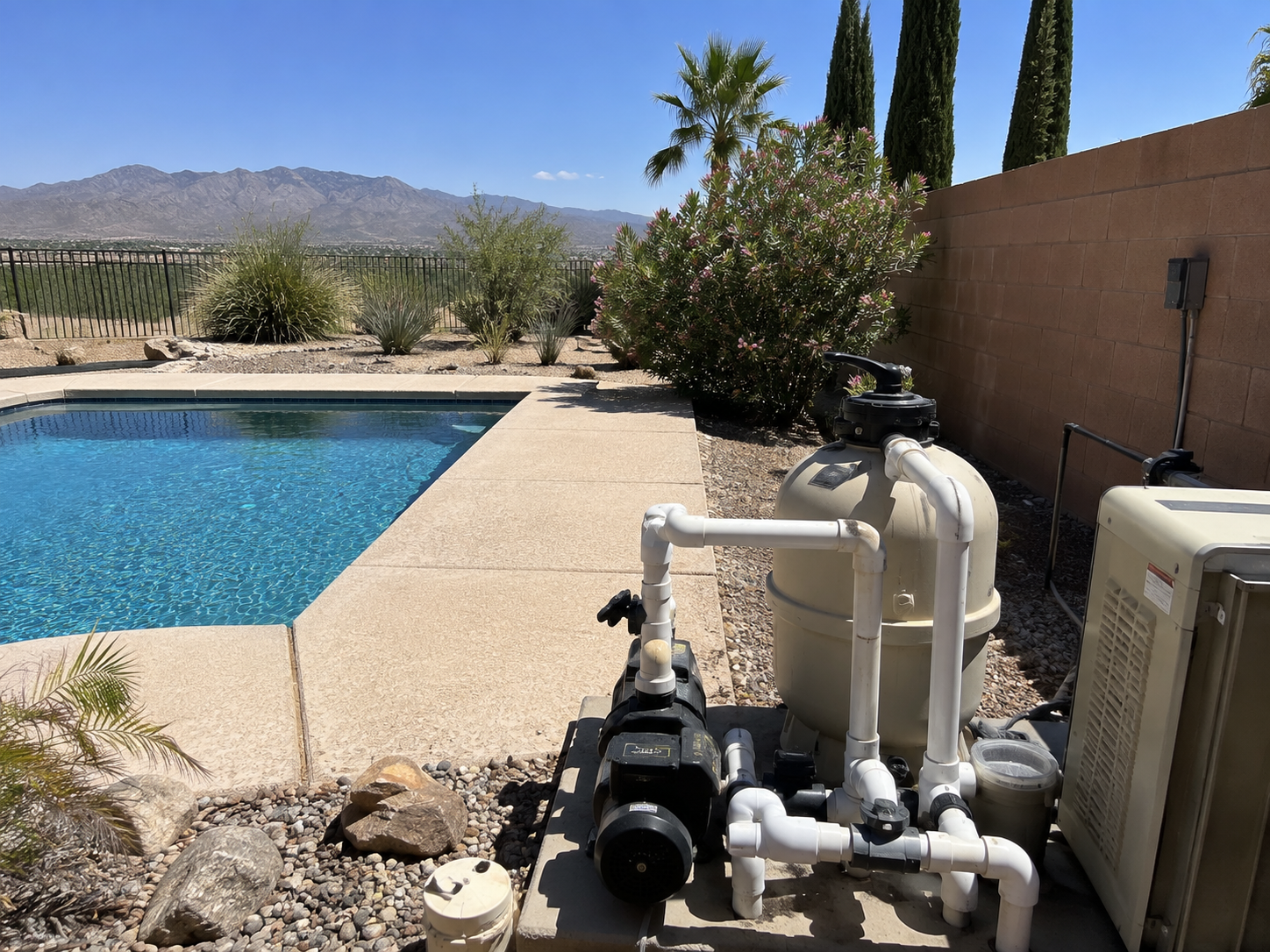
Your pool pump, pump and filter system, heater, and all connections on the equipment pad can develop drips. A loose union, worn gasket, or cracked fitting may not look significant, but it adds up over a full day.
Backwash and Splash Out
These are typical reasons for some loss, but they usually account for less than a quarter inch. If you are seeing a 2 inch a day drop, these are not the explanation.
How Many Gallons Are You Really Losing?
To put it in perspective, here is what different rates look like for a typical 15,000 gallon pool:
At 2 inches per day, you could be wasting over 1,200 gallons. That is excessive water loss that no pool owner should ignore. At this rate, you are constantly having to fill your pool just to keep it usable.
What to Do If Your Pool Is Leaking
If the bucket test confirmed a problem, here are the steps to take.
Step 1: Shut everything down. Watch where the water stops dropping. If it stabilizes at the skimmer, light, or a visible crack, you may have found your answer.
Step 2: Inspect the equipment. Walk the pad and look for drips, moisture, or standing water.
Step 3: Check the ground. Walk around and look for soggy soil, unusually green grass on one side of the pool, or any area that stays wet.
Step 4: Try a dye test. If you suspect a specific spot, hold dye near it with everything off. If the dye gets pulled toward a crack or gap, that indicate a leak at that location.
Step 5: Call a professional. If you cannot locate the source, or if the loss is severe, a professional leak inspection is the fastest way to get answers.
How to Reduce Loss and Keep Your Pool Healthy
Even after fixing an issue, pool owners can take steps to reduce everyday loss and keep water where it belongs.
- Use a cover. A pool cover can cut evaporation by up to 95%. In desert climates, this is one of the best investments you can make.
- Watch the temperature. Warmer water tends to evaporate faster, causing water to evaporate at a higher rate. If you run a pool heater, lowering it a few degrees helps.
- Reduce run time on features. Fountains, waterfalls, and spillovers increase the surface area exposed to wind and heat loss. Running them less can slow things down.
- Stay on top of pool maintenance. Regular inspections catch small cracks and worn fittings before they become bigger problems.
- Monitor water overnight. Make it a habit to check the level each morning. If you see it has dropped more than usual, act fast.
When to Call Desert Otter Pools
If the level keeps dropping at a rate of 2 inches a day, DIY testing can only take you so far. At some point, you need a professional with the right tools.
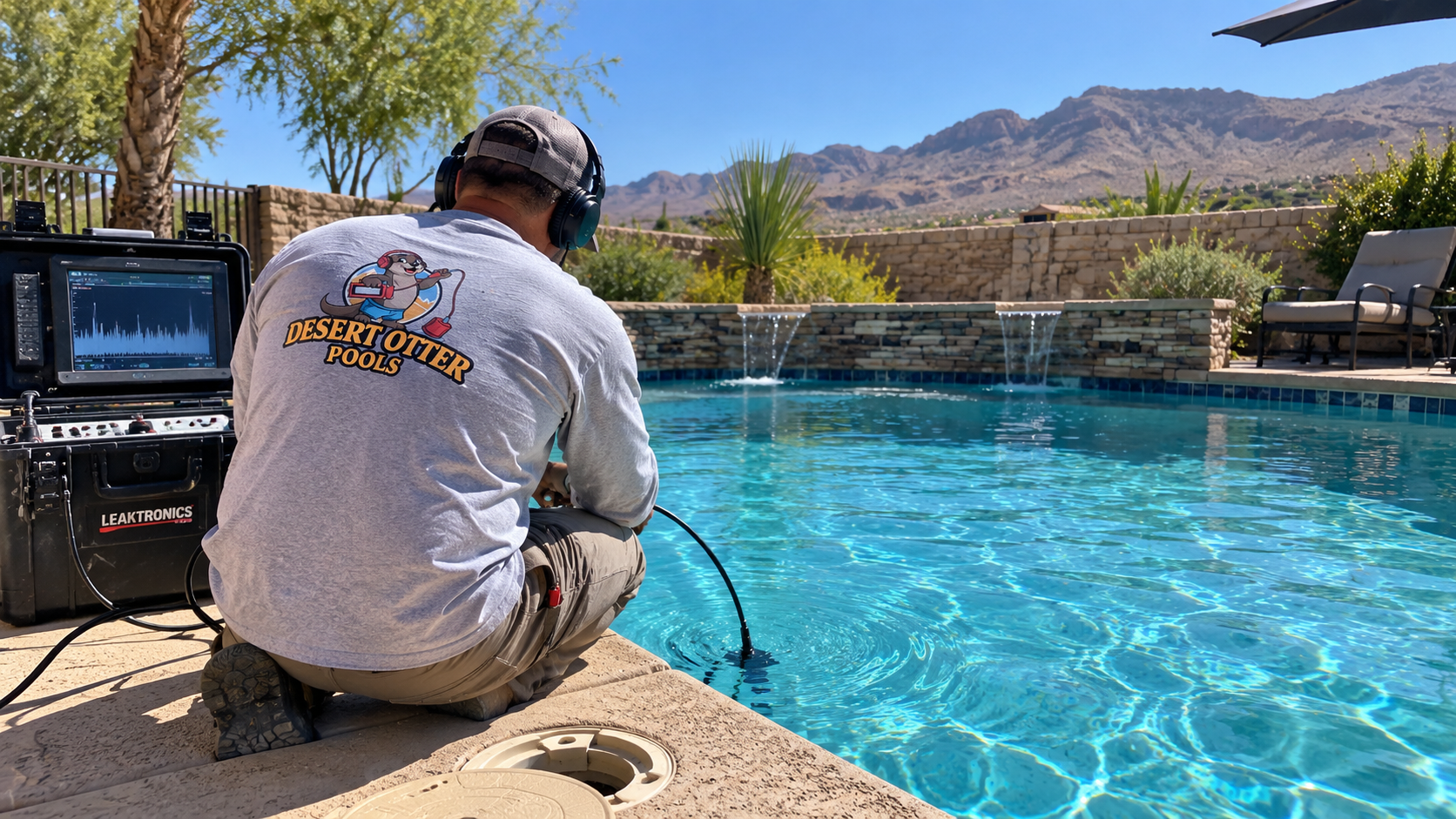
Desert Otter Pools specializes in pool leak detection for homeowners across Las Cruces, El Paso, and surrounding communities within 300 miles. Our LeakTronics Certified, Watershape Construction and Fluid Engineering Certified team uses advanced equipment to find issues in the shell, plumbing, skimmer, and equipment without tearing up your yard.
What we offer:
- Professional leak detection and diagnosis
- Pool repair services to fix the problem right
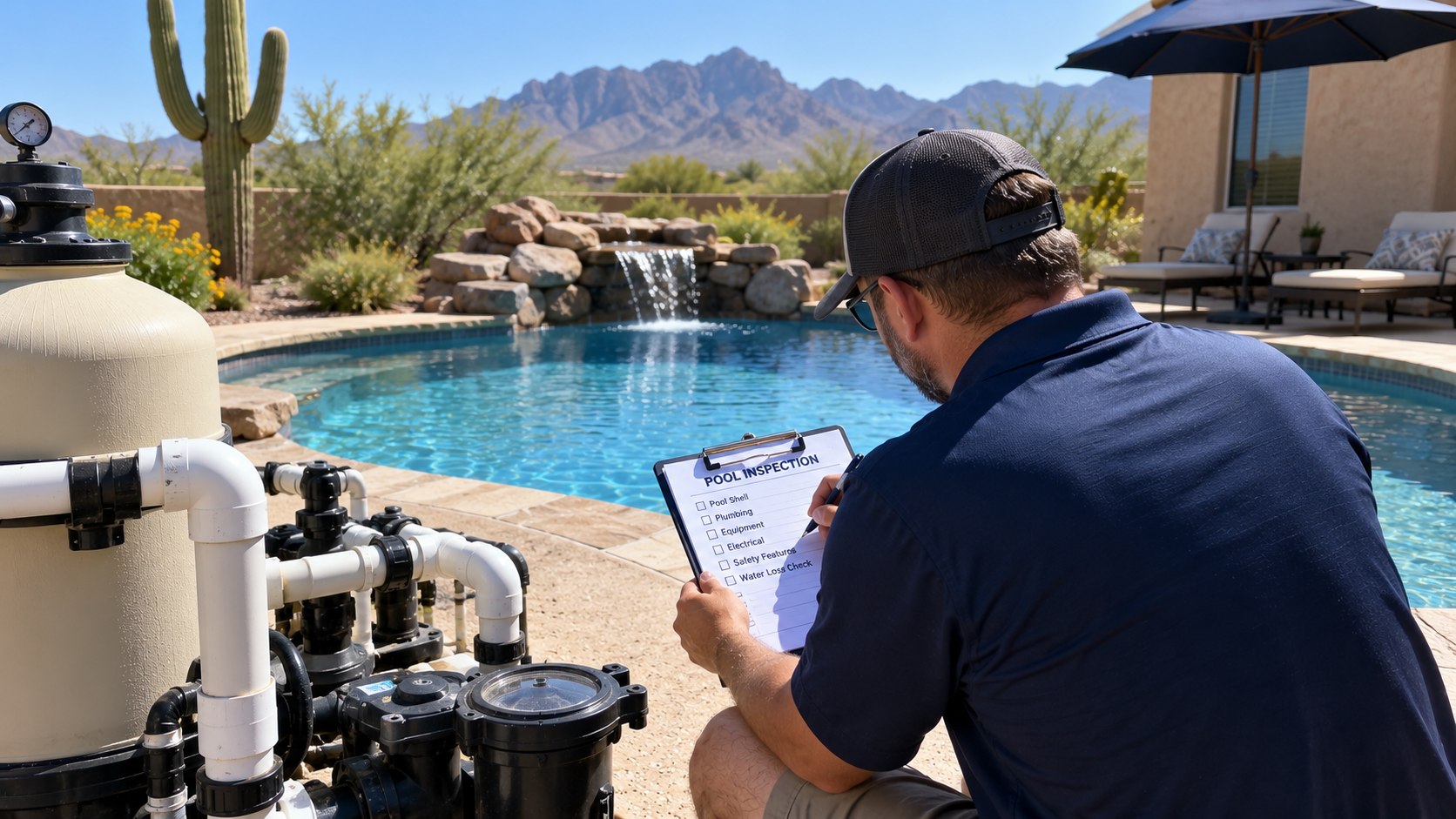
- Pool inspection for buyers, sellers, and concerned owners
- Monthly pool service and maintenance to keep things running smoothly
- Pool and spa expertise you can trust
Stop the Loss. Save Your Pool. Call Today.
Two inches per day is not something to brush off. It means your pool may have a serious issue that will only get worse. Whether it is a cracked shell, a failing seal, or a hidden plumbing problem, getting it fixed now saves you money, new water, and headaches later. Act now to protect your pool and your wallet.
Call Desert Otter Pools today at (575) 219-8420 or contact us online to schedule your appointment.
Desert Otter Pools is a LeakTronics Certified, Watershape Construction and Fluid Engineering Certified pool and spa company serving Las Cruces, NM and communities within a 300-mile radius.