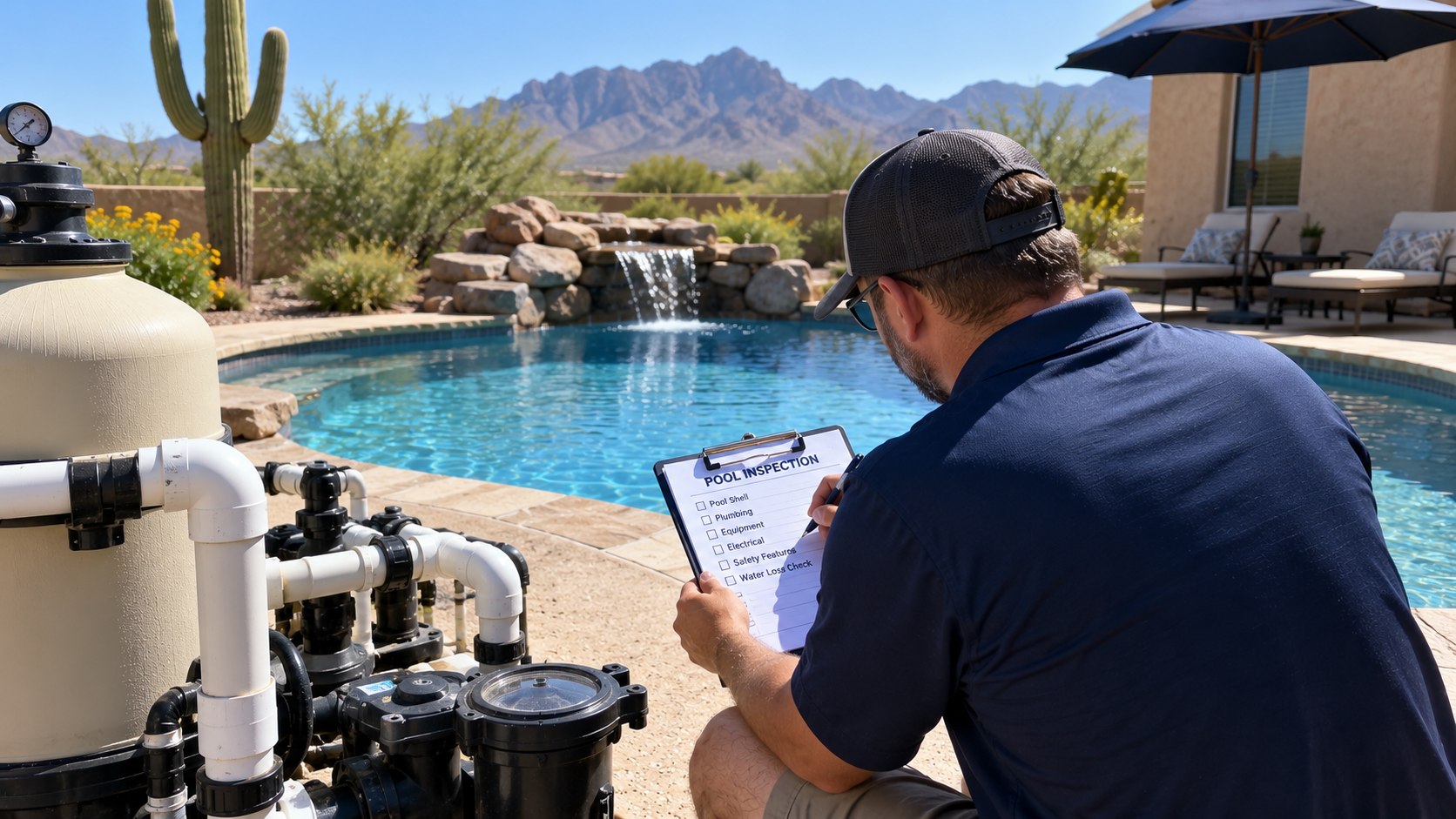
A professional pool inspection covers more than most owners expect. Here's what Desert Otter Pools checks from the shell and plumbing to equipment and safety, and why it matters for Las Cruces pools.
Most pool owners in Las Cruces know their pool needs regular cleaning and chemical maintenance. Fewer know that a pool inspection is an entirely different service, one that goes far deeper than checking chlorine levels or skimming leaves. A professional pool inspection evaluates the structural integrity of the shell, the condition of the plumbing system, the performance of the equipment, the safety of the pool's electrical and bonding components, and more. Desert Otter Pools provides pool inspections throughout Las Cruces and the surrounding New Mexico and West Texas communities, and this guide breaks down exactly what that inspection covers and why each element matters for desert pool owners specifically.
Why Pool Inspections Matter in the Chihuahuan Desert
Las Cruces pools face conditions that pools in other climates simply do not. The combination of intense UV exposure, alkaline-heavy water, extreme heat during summer, and wide temperature swings between seasons creates wear patterns unique to the desert Southwest.
Evaporation rates in Las Cruces can exceed half an inch per day during the hottest months, which makes it genuinely difficult for pool owners to determine whether they have a water loss issue or whether the sun and wind are simply doing what they always do. The local water supply is high in calcium and mineral content, which accelerates scale buildup on surfaces, inside heaters, and on equipment fittings. The region's temperature swings, from summer highs well above 100 degrees to winter lows that occasionally drop near or below freezing, stress pool plumbing and shell materials in ways that build up over time.
A professional pool inspection is the systematic way to catch the problems these conditions create before they become expensive repairs.
What Desert Otter Pools Inspects
Pool Shell and Surface Condition
The inspection begins with a thorough evaluation of the pool shell. The inspector examines the entire interior surface for cracks, delamination, spalling, and areas where the plaster or finish has deteriorated. Not every crack is a structural concern, but certain crack patterns indicate movement or stress that warrants attention.
In Las Cruces and the surrounding Mesilla Valley, the soil composition and the region's seismic activity both contribute to ground movement that pools in other areas do not experience to the same degree. Shell cracks that follow structural seams, appear at plumbing penetrations, or show signs of displacement rather than surface-level crazing are flagged during the inspection as potentially structural.
The tile line, coping, and bond beam are checked for cracking, separation, and signs of water intrusion behind the tile. Calcium scale buildup on the tile line is evaluated both cosmetically and as an indicator of water chemistry management over time.
Plumbing Line Pressure Testing
Underground plumbing is one of the most common sources of pool water loss, and it is also one of the least visible. Desert Otter Pools uses pressure testing to evaluate the integrity of the plumbing lines, including return lines, suction lines, and main drain lines running beneath the deck.
Pressure testing works by isolating sections of the plumbing system and testing them under controlled pressure. A section that holds pressure is intact. A section that drops pressure indicates a breach, which the inspector then works to localize. This process identifies leaks that would otherwise go undetected indefinitely, silently losing water and saturating the soil around the pool structure.
In a desert climate, underground leaks are particularly problematic because the soil around a pool in Las Cruces is typically dry and stable. Water introduced by a plumbing leak changes that soil's behavior, causing it to swell and shift in ways that can stress the pool shell and deck over time.
Leak Detection at Pool Fittings and Features
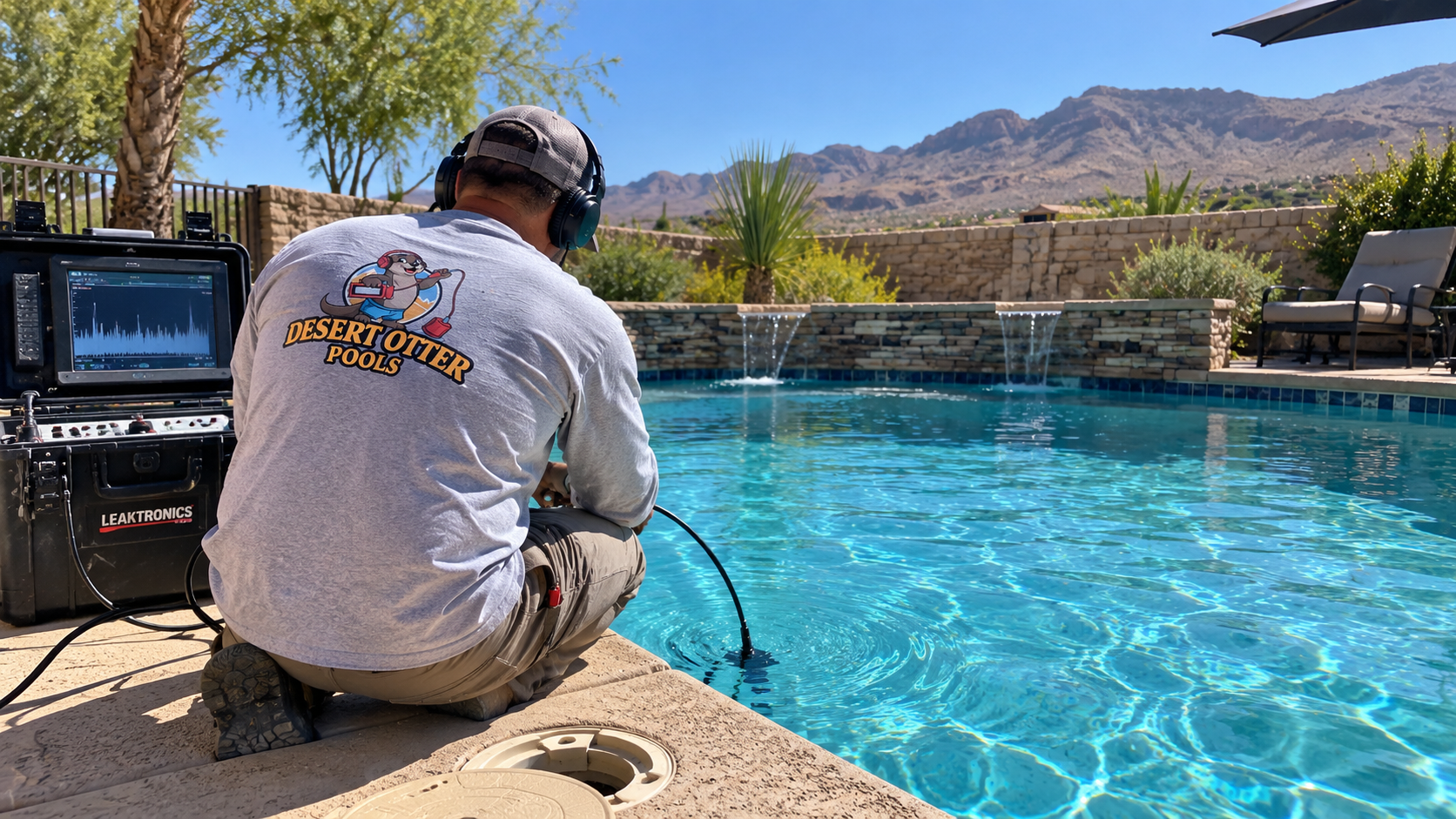
Beyond plumbing line pressure testing, the inspection uses dye testing to evaluate specific pool features and fittings where water commonly escapes: return jets, skimmer throats, main drain assemblies, light niches, and fittings at the equipment pad. Desert Otter Pools is LeakTronics Certified, which means the team uses professional-grade acoustic and electronic detection equipment that can locate leaks with a precision that visual inspection alone cannot achieve.
Dye testing is a straightforward process: a small amount of dye is introduced near a suspected leak point, and the inspector watches whether the dye is drawn into the fitting or crack by escaping water. It sounds simple, but reading the result accurately and knowing where to test requires training and experience. Missing a leak at a light niche or a return fitting during an inspection is easy to do without the right approach.
Equipment Inspection and Assessment
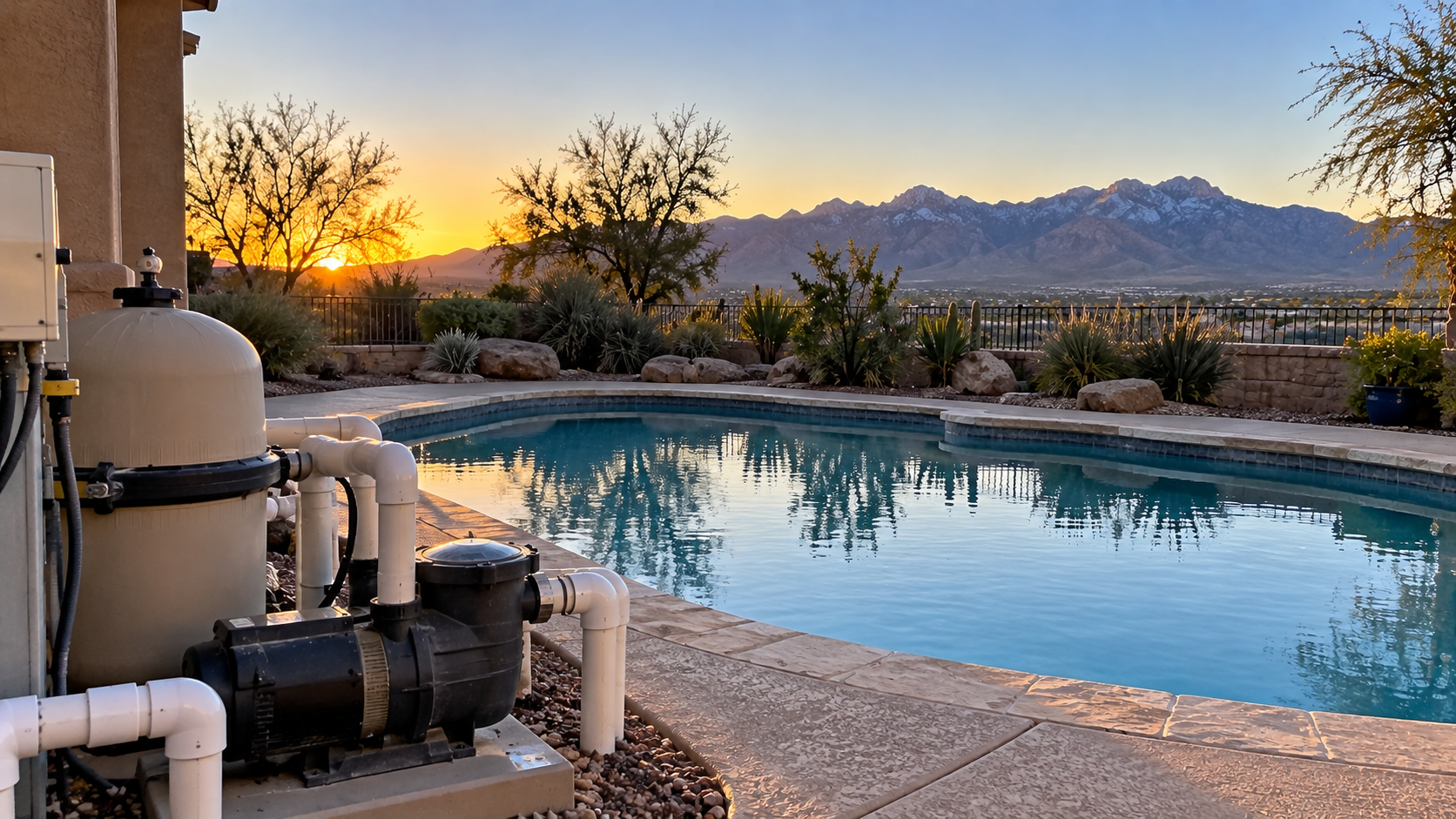
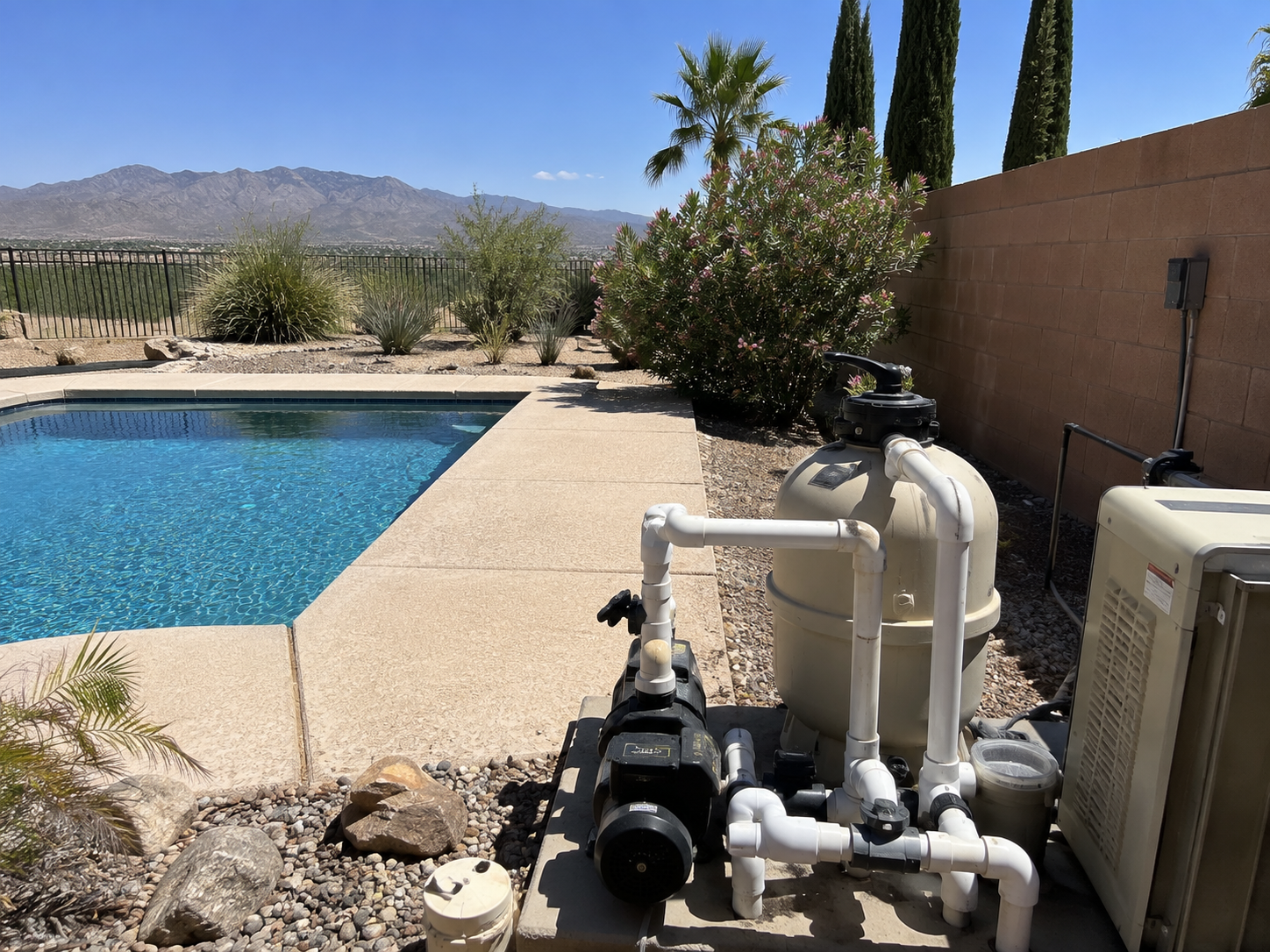
The pump, filter, heater, and any automation equipment are evaluated for current condition, estimated remaining useful life, and any signs of active problems.
Pump: The inspector checks for proper priming, signs of air in the system, shaft seal condition, motor temperature, and any unusual noise or vibration during operation. A pump that runs is not necessarily a pump that is performing correctly or that will continue to perform.
Filter: Filter condition and media are evaluated. Sand filters are checked for channeling and media age. Cartridge filters are inspected for tears, collapsed pleats, and bypass conditions. DE filters are evaluated for grid condition and proper DE loading. A filter operating with compromised media passes particles it should retain and delivers poor water quality even with correct chemical maintenance.
Heater: In Las Cruces, heater heat exchangers are subject to accelerated scaling from the area's hard water. The inspector checks for scale buildup inside the heater, proper ignition and operation, and signs of corrosion at the heat exchanger and combustion components. A heater with significant scale buildup on the heat exchanger operates inefficiently and has a shortened lifespan.
Automation and controls: Any existing automation systems, timers, and controls are evaluated for proper programming and function.
Safety Equipment and Compliance
Pool safety equipment receives specific attention during the inspection. This includes:
Drain covers and anti-entrapment compliance. The Virginia Graeme Baker Act established federal standards for drain covers to prevent entrapment. Older pools frequently have drain covers that predate these standards. The inspection notes whether drain covers meet current requirements.
Bonding and grounding. Pool water, metal equipment, and electrical systems need to be properly bonded and grounded to prevent stray voltage conditions. Older pools in Las Cruces and the surrounding area may have bonding systems that have corroded, been improperly maintained, or were never installed to current standards. The inspection evaluates the bonding system and flags any deficiencies.
GFCI protection. Outlets and electrical connections within the pool equipment area and at poolside locations need GFCI protection. The inspector verifies this protection is in place and functional.
Fencing and gate hardware. Pool barrier requirements apply to most residential pools in New Mexico. The inspector notes whether existing barriers meet current standards, including gate self-closing and self-latching mechanisms.
Deck and Surrounding Hardscape
The pool deck, coping, and surrounding hardscape are evaluated for cracking, settling, soft spots, and signs of subsurface saturation or voids. In the Las Cruces area, alkali soils and the occasional significant rain event can create conditions where the ground beneath a pool deck erodes or shifts. Deck sections that have sunk relative to adjacent areas, cracks radiating outward from the pool edge, or soft spots that flex underfoot can all indicate subsurface conditions worth investigating further.
Coping separation from the bond beam is a specific checkpoint. This joint, where the coping meets the top of the pool shell, is a common water entry point. When it separates, water can migrate behind the tile and into the bond beam, accelerating deterioration.
Water Chemistry Snapshot
The inspection includes a water chemistry reading to establish baseline conditions at the time of the inspection. Parameters checked include pH, total alkalinity, calcium hardness, cyanuric acid (stabilizer), and sanitizer levels.
For Las Cruces pool owners, calcium hardness is a particularly relevant parameter. The local water supply arrives with high calcium content, and pools that are not actively managed for calcium hardness tend to accumulate scale on surfaces and equipment faster than pools in lower-hardness areas. A calcium hardness reading well above the recommended range at the time of inspection tells the inspector something about how the pool has been managed.
Who Should Get a Pool Inspection
Pool inspections are valuable in several situations that go beyond the obvious.
Home Buyers
A pool inspection before closing on a home is one of the most cost-effective things a buyer can do. Standard home inspectors do not pressure-test pool plumbing, do not perform leak detection, and do not evaluate pool equipment with the depth a specialist brings. Problems discovered after closing become the buyer's financial responsibility.
Desert Otter Pools serves the greater Las Cruces area including El Paso, Sunland Park, Horizon City, Chaparral, Anthony, and surrounding communities, where real estate transactions involving pool properties happen regularly.
Homeowners After a Hard Winter
Las Cruces does not have the sustained freezes of northern climates, but the region does see hard freezes, and the pipes do not know the difference. A pool inspection after a winter with unusually cold temperatures checks for plumbing damage, cracked fittings, and equipment issues that freeze-thaw cycles can create.
Pools Coming Out of Extended Vacancy
A pool that has sat unoccupied or under-maintained for a season or longer accumulates problems faster than one under regular care. An inspection after a period of vacancy gives the owner a clear picture of what the pool's current condition actually is before investing in ongoing maintenance.
Annual or Periodic Inspections
Many pool owners in Las Cruces use a periodic professional inspection as a maintenance tool even when the pool is in regular use and apparently functioning normally. Equipment wear, slow plumbing leaks, and shell surface deterioration all develop gradually. Catching them at an early stage costs less to address than letting them run until a symptom becomes obvious.
What You Receive After the Inspection
After the inspection, Desert Otter Pools provides a clear summary of findings that covers what was evaluated, what was found, and what the recommended next steps are. If the inspection identifies a leak, the team can move directly into leak repair services without requiring the pool owner to schedule a separate appointment and start over. If equipment issues are identified, the findings give the owner a prioritized understanding of what needs attention now versus what can wait.
The goal is not a long document full of jargon. It is a clear picture of the pool's actual condition so the owner can make informed decisions about what comes next.
FAQ: Professional Pool Inspections in Las Cruces
How long does a pool inspection take?
A thorough pool inspection for a standard residential pool in Las Cruces typically takes two to three hours. Pools with more complex equipment systems, larger surface areas, or conditions that prompt closer investigation of specific areas may take longer.
Does the pool need to be drained for an inspection?
No. The vast majority of the inspection is performed with the pool full and the equipment running. Pressure testing requires temporarily isolating sections of the plumbing, but the pool does not need to be drained. Draining a pool in the Las Cruces heat creates its own risks to the plaster and shell, and it is not a standard part of a professional inspection.
What is the difference between a pool inspection and pool maintenance?
Pool maintenance is the ongoing service that keeps a pool clean, chemically balanced, and operating day to day. A pool inspection is a diagnostic evaluation of the pool's structural and mechanical condition. Maintenance keeps a pool running; an inspection tells you the condition of what is running and identifies problems that maintenance alone would not catch.
How often should a pool in Las Cruces be inspected?
For most Las Cruces pool owners, an annual inspection is a reasonable baseline. Pools in homes being sold or purchased, pools coming out of a hard winter, and pools that have been under-maintained or unoccupied warrant an inspection regardless of when the last one occurred.
Does Desert Otter Pools service areas outside Las Cruces?
Yes. Desert Otter Pools serves a radius of up to 300 miles from Las Cruces for leak detection and inspection services, covering El Paso, Horizon City, Sunland Park, Chaparral, Anthony, Deming, and Alamogordo, among other communities in New Mexico and West Texas.
A professional pool inspection gives you an honest, complete picture of your pool's condition, documented by certified technicians who know what to look for in desert Southwest pools specifically. Desert Otter Pools is ready to schedule your inspection throughout Las Cruces and the surrounding area. Reach out to book a consultation today.