Sunland Park pools lose water fast in the desert heat, but evaporation is not always the cause. Desert Otter Pools explains how to spot a leak, why they happen here, and what professional detection looks like.
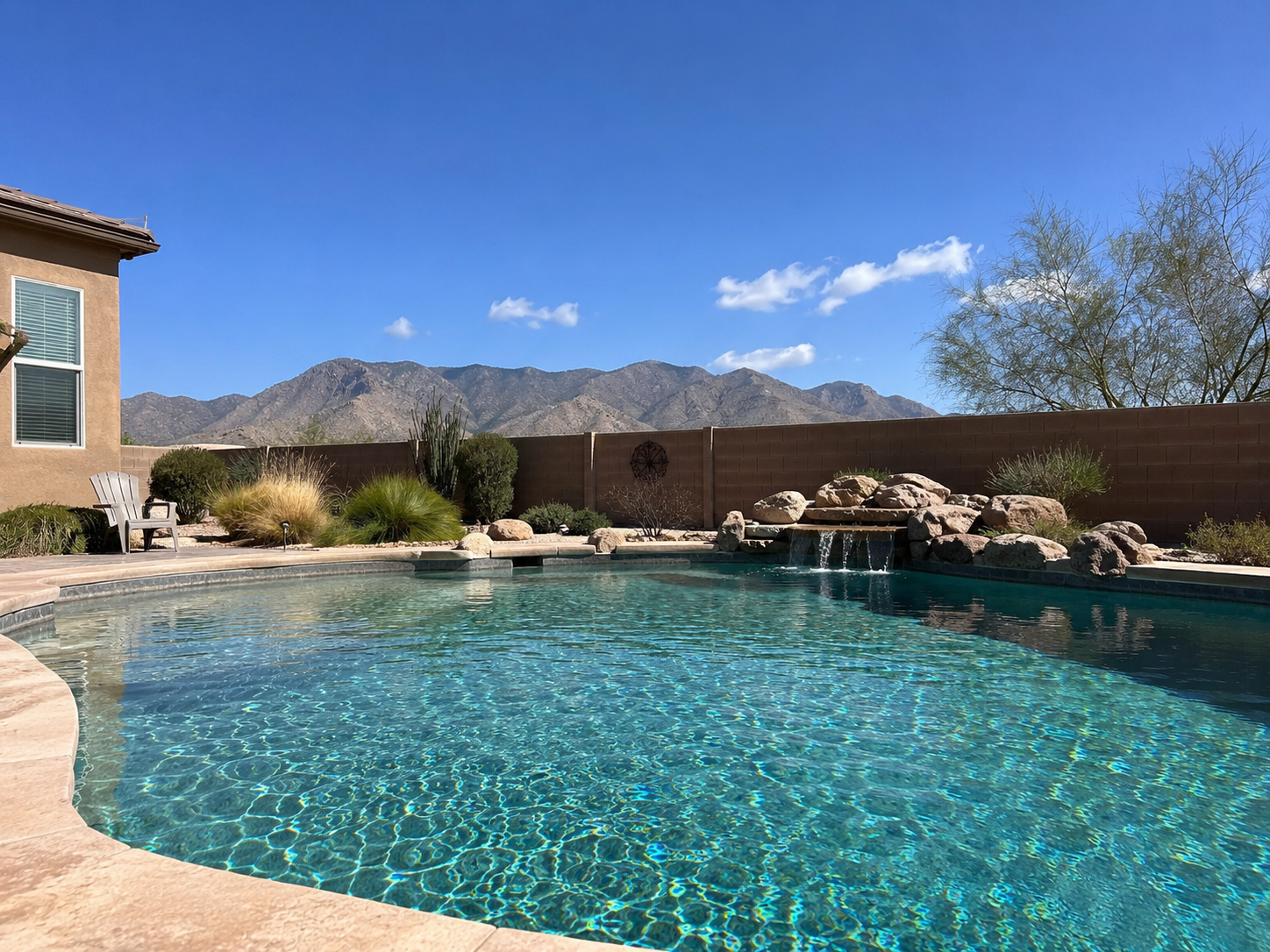
Sunland Park sits right on the New Mexico and Texas state line, where the Chihuahuan Desert meets the Rio Grande Valley and summer temperatures routinely push past 100 degrees. Owning a pool here is a genuine quality-of-life investment, and losing water to a slow leak quietly chips away at that investment month after month. Desert Otter Pools serves Sunland Park homeowners with professional pool leak detection and repair from our Las Cruces base, and the terrain and climate here create some specific conditions worth understanding before you assume your water loss is just evaporation.
This guide covers how to recognize a pool leak in Sunland Park, why leaks develop in this environment, and what the detection and repair process looks like when you call a professional.
Why Sunland Park Pools Lose Water Faster Than You Expect
The desert Southwest is deceptive when it comes to pool water loss. Evaporation rates in this part of New Mexico are genuinely high. A pool in Sunland Park can lose a quarter inch of water per day or more in peak summer through evaporation alone, which makes it easy to dismiss a real leak as just the climate doing what it does.
The problem is that a leaking pool and an evaporating pool look exactly the same from the outside until the numbers stop making sense. If you are adding water more than once a week, or if your auto fill is running constantly, evaporation alone is rarely the full explanation.
Sandy and caliche soils accelerate the problem. The ground around Sunland Park contains sandy, caliche-heavy soils that drain quickly. When a pool is losing water through a slow plumbing leak or a crack in the shell, that water drains into the surrounding soil fast and disappears without leaving the kind of wet, saturated ground you might see in other parts of the country. That drainage means a slow leak can run for months without producing any obvious surface evidence.
Temperature swings stress pool structures. The Sunland Park area sees significant temperature swings between day and night, particularly in spring and fall. Concrete and plaster expand and contract with those temperature changes, and over time that cycling creates micro-cracks in the pool shell and stresses fittings and connection points. A fitting that holds up fine in a stable-temperature environment may develop a slow leak in conditions where it expands and contracts repeatedly across a wide range.
Border region soil movement. The Rio Grande Valley area has a history of minor ground movement that can shift pool shells and stress underground plumbing connections over time. These shifts are rarely dramatic, but they are enough to open up gaps at joints and fittings that allow water to escape.
Signs Your Sunland Park Pool May Have a Leak
Knowing what to watch for is the first step. These are the most reliable indicators:
Consistent water loss beyond evaporation. The bucket test is the simplest way to separate evaporation from a real leak. Fill a bucket with pool water, place it on a step, and mark both the pool level and the bucket level. After 24 hours, compare the two drops. If the pool dropped more than the bucket, something other than evaporation is at work.
Auto fill running more than usual. If your pool has an automatic fill valve and you notice the water running more frequently or for longer periods than normal, that is a reliable early signal. The auto fill is compensating for water loss, and it does not distinguish between evaporation and a leak.
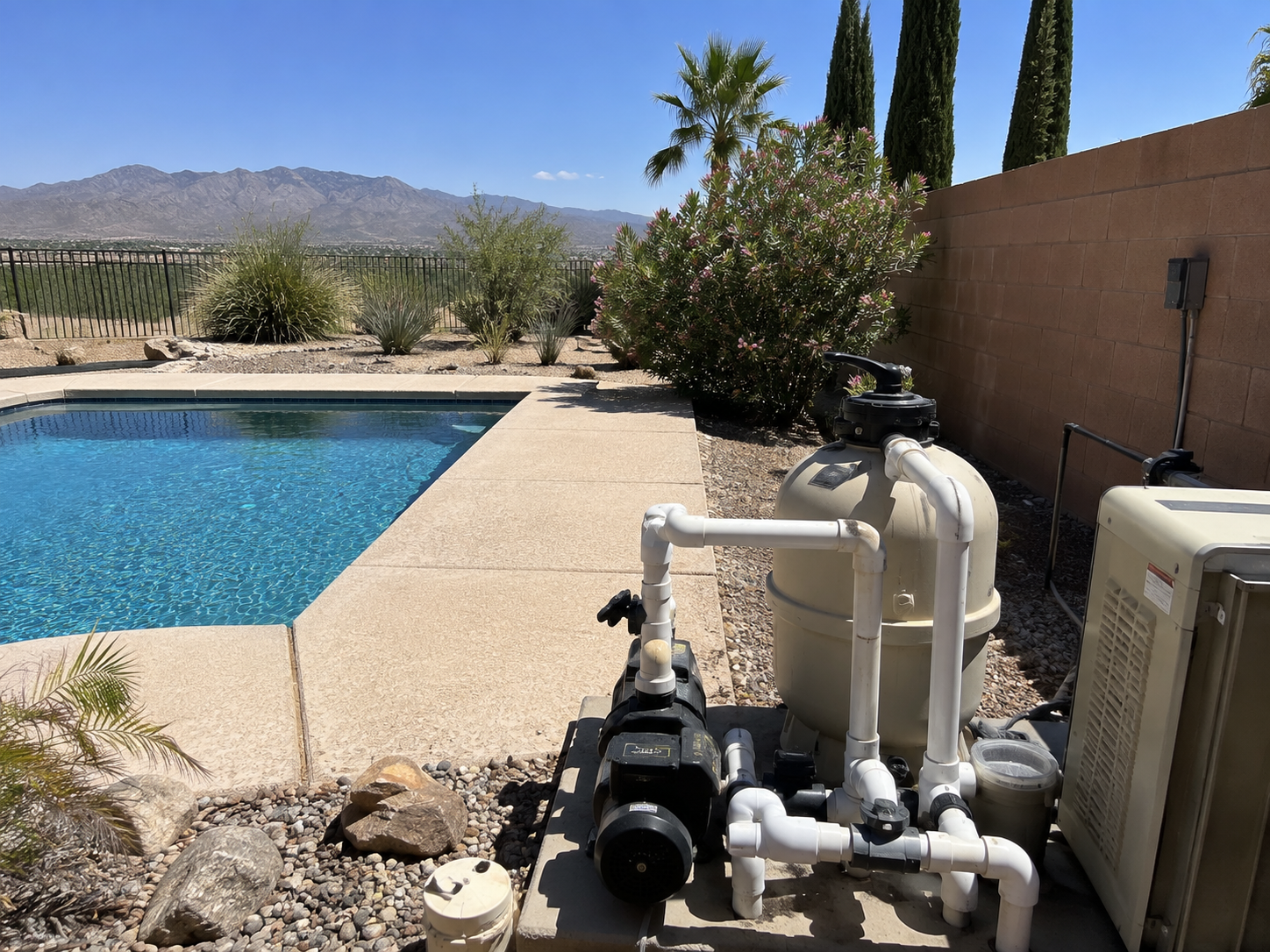
Unexplained wet spots near the equipment pad. Damp soil around your pump, filter, or plumbing connections that appears without an obvious source like a recent rain is worth investigating. Underground plumbing leaks near the equipment pad often surface as persistent moisture in the area around the pad.
Air bubbles returning through the jets. When a suction-side plumbing line develops a crack or a loose fitting, it draws air into the system along with water. That air travels through the pump and returns through the jets as bubbles. Consistent air in the return jets, particularly when the pump is running normally, is a sign worth checking.
Dropping water level that stabilizes at the skimmer. If your water level drops and then stops falling right at the bottom of the skimmer throat, the skimmer itself is the likely source. Water is escaping through the skimmer connection or body and stops once the water level drops below the leak point.
How Desert Otter Pools Diagnoses a Pool Leak in Sunland Park
Guessing at a leak source wastes time and money. Our process uses a combination of methods to confirm the source before any repair work begins.
Pressure testing. We isolate and pressure test each plumbing line individually, including the skimmer line, return lines, and main drain line. A line that fails to hold pressure has a breach somewhere. This tells us exactly which line is compromised and narrows the search considerably before we dig into the specifics.
Dye testing. With the pump off and the water still, we introduce dye near suspected leak points including fittings, returns, and the skimmer throat. If a leak is present, the dye visibly pulls toward and through the gap. This method is non-invasive and conclusive when done correctly.
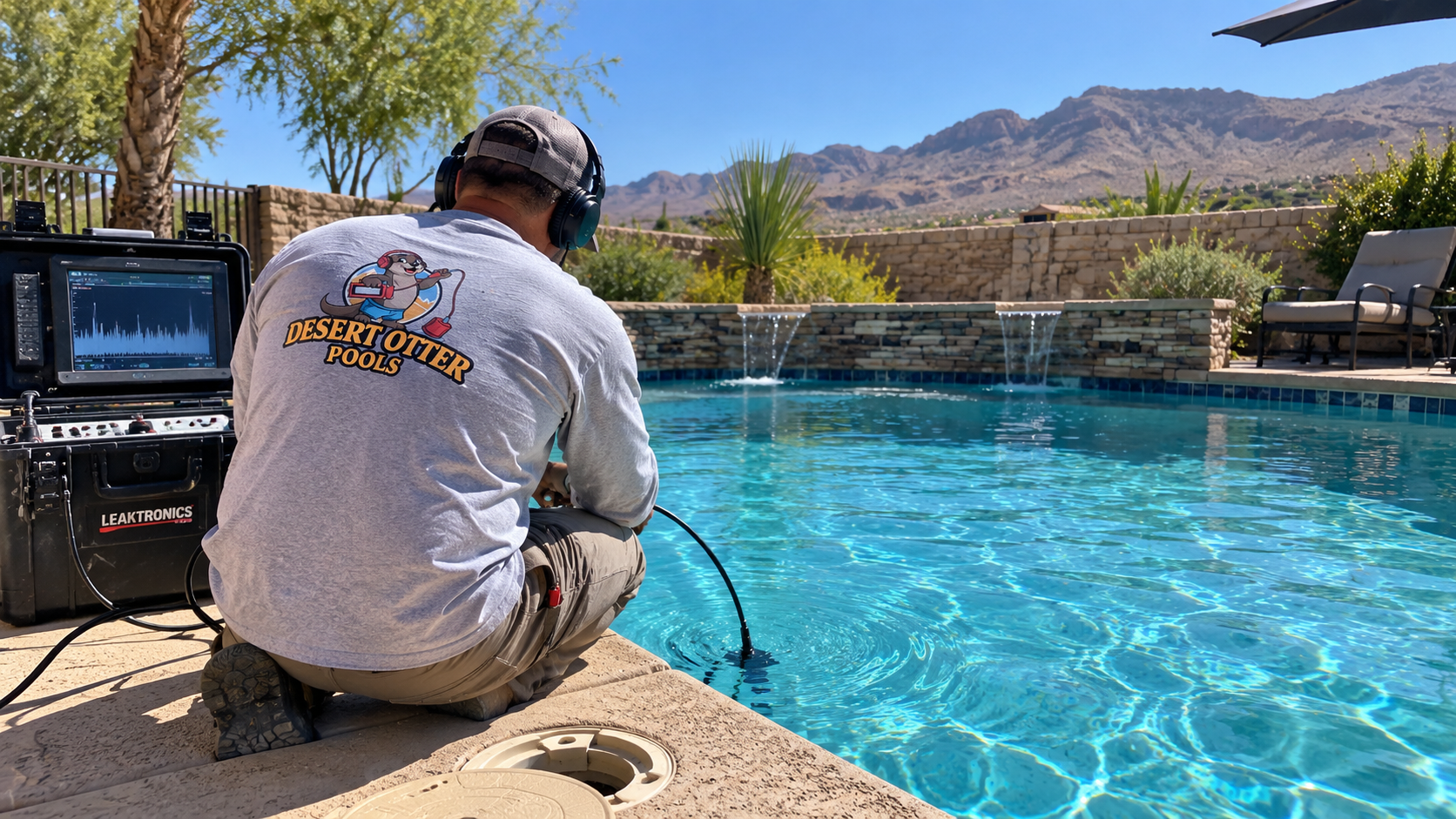
LeakTronics acoustic detection. Desert Otter Pools uses LeakTronics certified equipment that listens for the acoustic signature of water escaping under pressure. This technology can locate leaks in underground plumbing lines and pool shell structures that pressure testing and dye work cannot pinpoint directly.
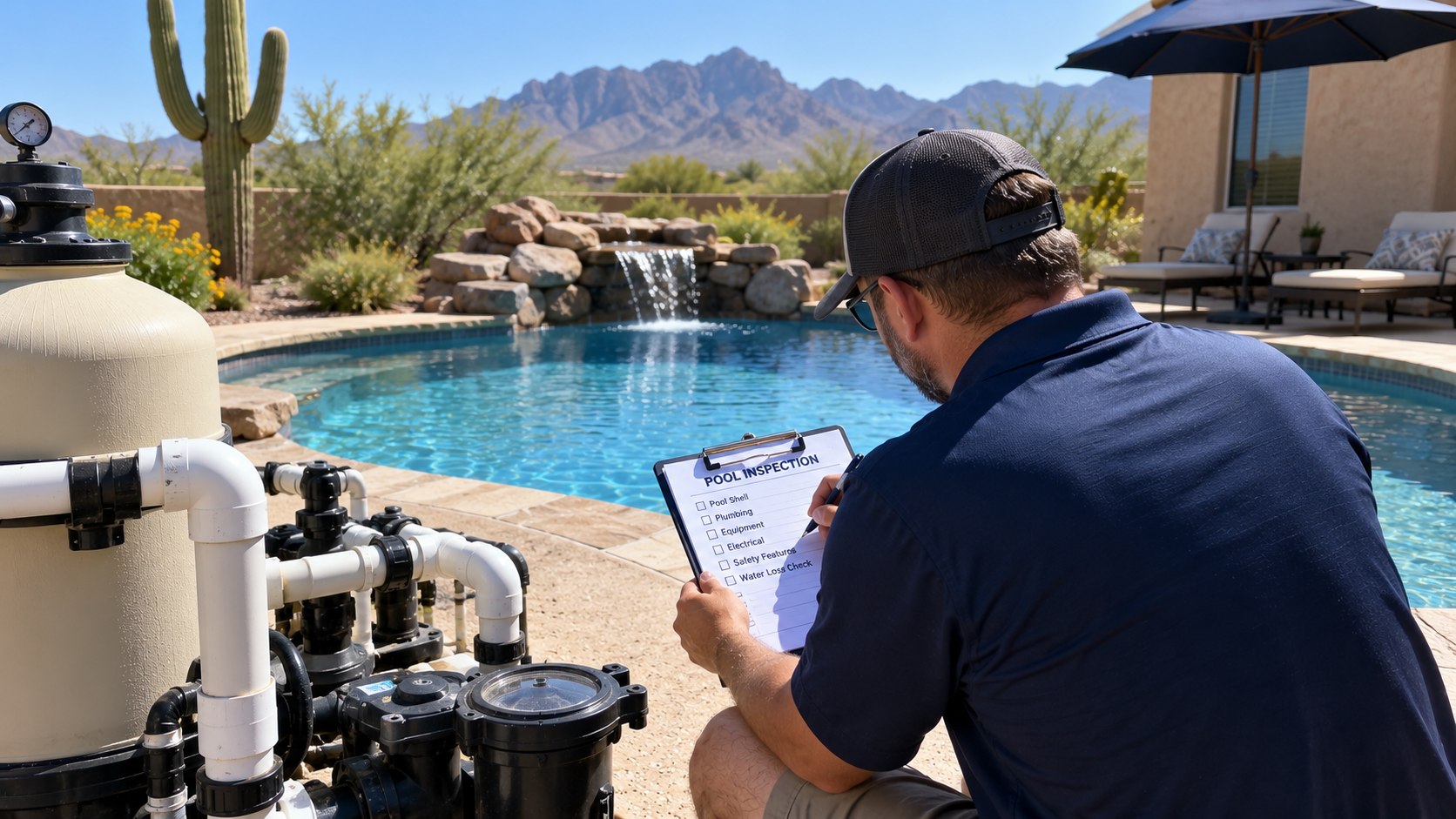
Full inspection. We conduct a visual inspection of the skimmer body, faceplate, light niches, return fittings, and accessible plumbing. In the desert Southwest, UV degradation on plastic components and dried-out gaskets are common contributors to leaks that a trained eye can identify quickly.
At the end of the detection process, you know exactly what is leaking and where. That information determines the repair approach.
Common Leak Sources We Find in Sunland Park Pools
Skimmer throat and faceplate leaks. The gasket between the skimmer faceplate and the pool wall is one of the most common failure points. UV exposure and temperature cycling dry out and harden the gasket over time, eventually breaking the watertight seal. This is among the more straightforward repairs we make.
Return line and fitting failures. Return line fittings and the eyeball fittings in the pool wall can develop leaks at their connections to the shell. These are often caught during dye testing and repaired without major disruption.
Underground plumbing line cracks. Caliche soil and ground movement in the Sunland Park area can stress buried plumbing lines at joints and transitions. When pressure testing reveals a failed line, we assess whether the repair is best handled through a targeted dig or a trenchless approach.
Shell cracks. Fine cracks in gunite or plaster pool shells develop over time from temperature cycling and ground movement. Small structural cracks are sealed and reinforced. Larger structural cracks may require more involved repair depending on their location and depth.
Light niche leaks. The conduit and fitting around pool light fixtures is a known leak point, particularly in older pools. Water can escape through a deteriorated light cord seal or a failed niche fitting.
What Repair Looks Like
Once we locate the source, the repair approach depends on what we found.
Gasket and fitting replacements handle most skimmer and return fitting leaks. These are typically completed in a single visit without draining the pool.
Crack repairs use appropriate patching materials matched to the pool surface type. Structural cracks are addressed with reinforcement to prevent further movement.
Trenchless pipe repair is an option for underground plumbing failures where a full dig would be disruptive or cost-prohibitive. We inject an epoxy liner through the pipe that cures in place and restores full function without excavating your deck or yard.
Targeted excavation is reserved for situations where the failed section needs to be accessed directly and trenchless repair is not a fit for the specific failure.
We provide upfront pricing before any repair work begins. No surprises once the job is underway.
FAQ
How do I know if my Sunland Park pool is leaking or just losing water to evaporation?
The bucket test gives you a reliable answer. Fill a bucket with pool water, mark both levels, and check back after 24 hours. If the pool dropped more than the bucket, evaporation is not the only cause. Desert Southwest evaporation rates are high, but a consistent difference between the two levels points to a leak worth investigating.
Does the sandy desert soil around Sunland Park make leaks harder to detect?
Sandy and caliche-heavy soil drains water loss quickly, which means you often will not see wet spots around a leaking pool the way you might in wetter climates. This makes professional pressure testing and LeakTronics acoustic detection the most reliable methods for confirming and locating a leak in this area.
Can you repair a pool leak without draining my Sunland Park pool?
In most cases, yes. Skimmer gasket replacements, fitting repairs, and minor crack repairs are typically done with the pool at or near normal water level. A full drain is rarely necessary unless the repair involves extensive shell work below the waterline.
How far does Desert Otter Pools travel to serve Sunland Park?
Sunland Park is within our regular service area. We travel from Las Cruces to serve Sunland Park and the surrounding El Paso Valley for leak detection, repair, inspections, and maintenance.
How soon can I get an appointment for pool leak detection in Sunland Park?
Call us at (575) 219-8420 or contact us online to check current availability. We aim to schedule leak detection appointments as quickly as possible, especially when a pool is actively losing significant water.
Suspect a Leak in Your Sunland Park Pool? Desert Otter Pools Can Help.
Desert Otter Pools serves Sunland Park and the surrounding El Paso Valley with LeakTronics-certified pool leak detection, professional repairs, and ongoing maintenance from our Las Cruces base. If your pool is losing water and you are not sure why, call (575) 219-8420 or contact us online for a free estimate. We find the leak and fix it right.