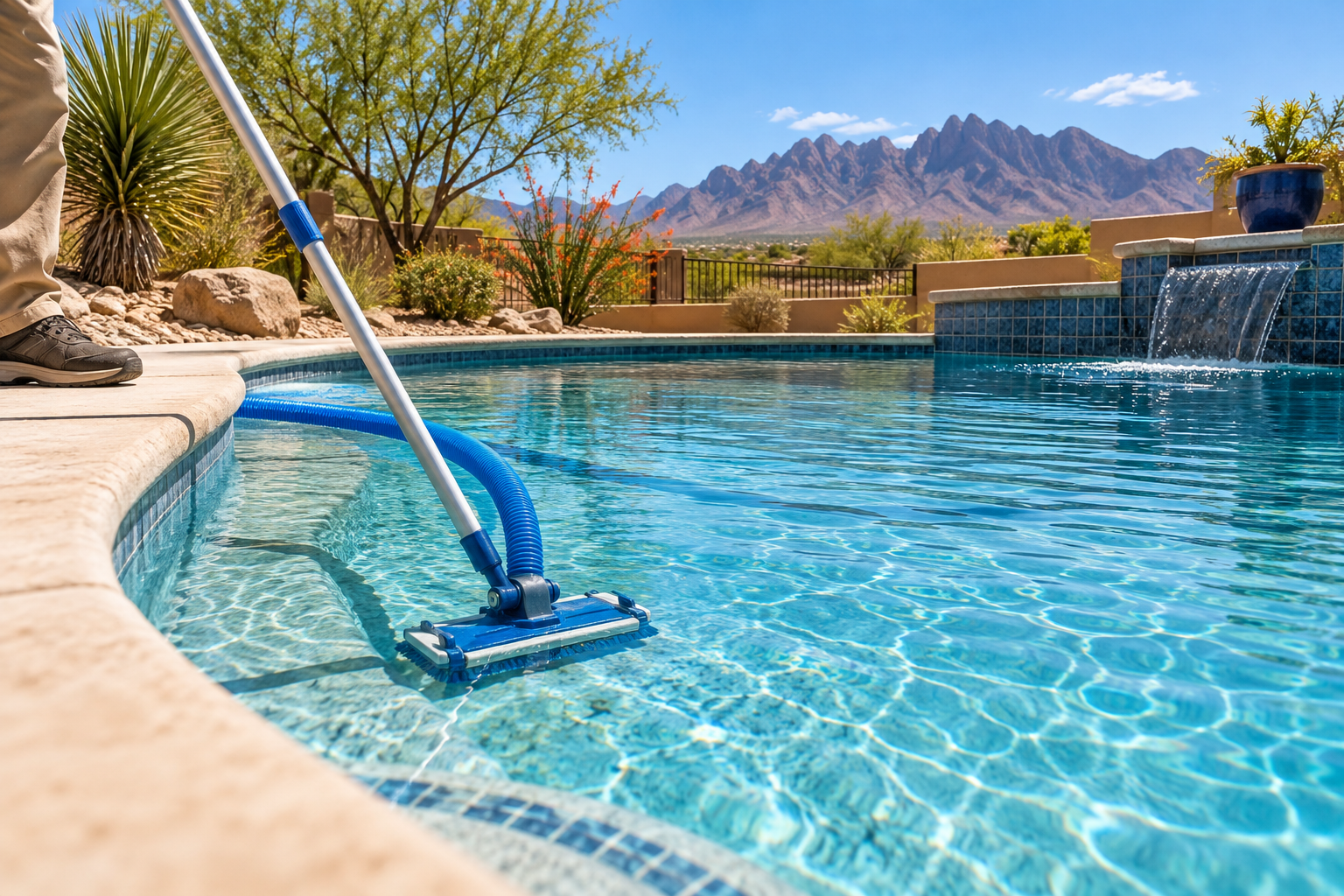
What monthly pool cleaning covers in Las Cruces and El Paso, from desert dust and debris to mustard algae.
Dust, Debris, and Desert Algae
Monthly pool cleaning in Las Cruces is a different job than it is in most of the country. Here, the main threat is rarely a pile of leaves. Instead, it's fine desert dust that drifts in quietly, settles on the floor, and gives algae a head start.
At Desert Otter Pools, we care for pools across Las Cruces, El Paso, and the surrounding Mesilla Valley. That means we know what a windy spring afternoon leaves behind in a backyard pool. This guide walks through what a monthly cleaning visit actually covers, and why each step matters in our climate.
Why Desert Pools Need a Regular Cleaning Schedule
A pool in the Chihuahuan Desert collects dirt differently than a pool back East. The debris is smaller, it arrives in waves, and it keeps coming all year. Regular cleaning is what keeps those small deposits from turning into a green pool.
Wind Season Brings the Dust
Spring is the windiest stretch of the year in southern New Mexico and far West Texas. From roughly March through May, gusty afternoons lift dust from open desert, dirt lots, and nearby fields. A good share of it lands in backyard water.
Dust looks harmless because it's so fine. However, windblown soil can carry organic matter and nutrients that feed algae. It also coats filter media, which slowly cuts down circulation.
Monsoon Storms Add a Second Wave
Then the summer monsoon shows up, usually in July. Storms roll in fast with heavy rain, strong gusts, and runoff from patios and gravel beds. As a result, a pool that looked spotless on Monday can be cloudy by Wednesday.
Rain also dilutes the water and washes yard debris over the coping. For that reason, late summer is when many local pools fall behind.
Sun and Heat Speed Everything Up
Las Cruces sits close to 4,000 feet, so the sun is intense for most of the year. Strong UV burns through chlorine quickly. Meanwhile, warm water gives algae ideal growing conditions.
Put those together, and dirt sitting on the floor for weeks is more than a cosmetic issue. It becomes the starting point for bigger problems.
What a Monthly Pool Cleaning Visit Covers
Think of a monthly visit as a full reset. It clears out what has built up, catches small problems early, and leaves the pool ready for the weeks ahead. Here's what a thorough visit typically includes.
- Skimming the surface. Floating debris comes off first: bugs, seed pods, blossoms, and the dusty film that collects along the waterline. Removing it now keeps it from sinking and breaking down on the floor.
- Brushing walls, steps, and the tile line. Brushing loosens dust and early algae before they bond to the plaster. Our hard water also leaves a chalky ring at the tile, so that line gets extra attention.
- Vacuuming the floor. Fine silt settles into a soft layer you can often see from the deck. Vacuuming pulls it out of the pool instead of stirring it back into circulation.
- Emptying skimmer and pump baskets. Packed baskets choke water flow and make the pump work harder. After a windy month, they can be surprisingly full.
- Cleaning or backwashing the filter. Dust loads a filter faster than most homeowners expect. A clean filter restores flow, so the water stays clearer between visits.
- A quick water check. We confirm that storms, dust, and heat haven't thrown the water off balance. Small corrections now prevent a cloudy surprise later.
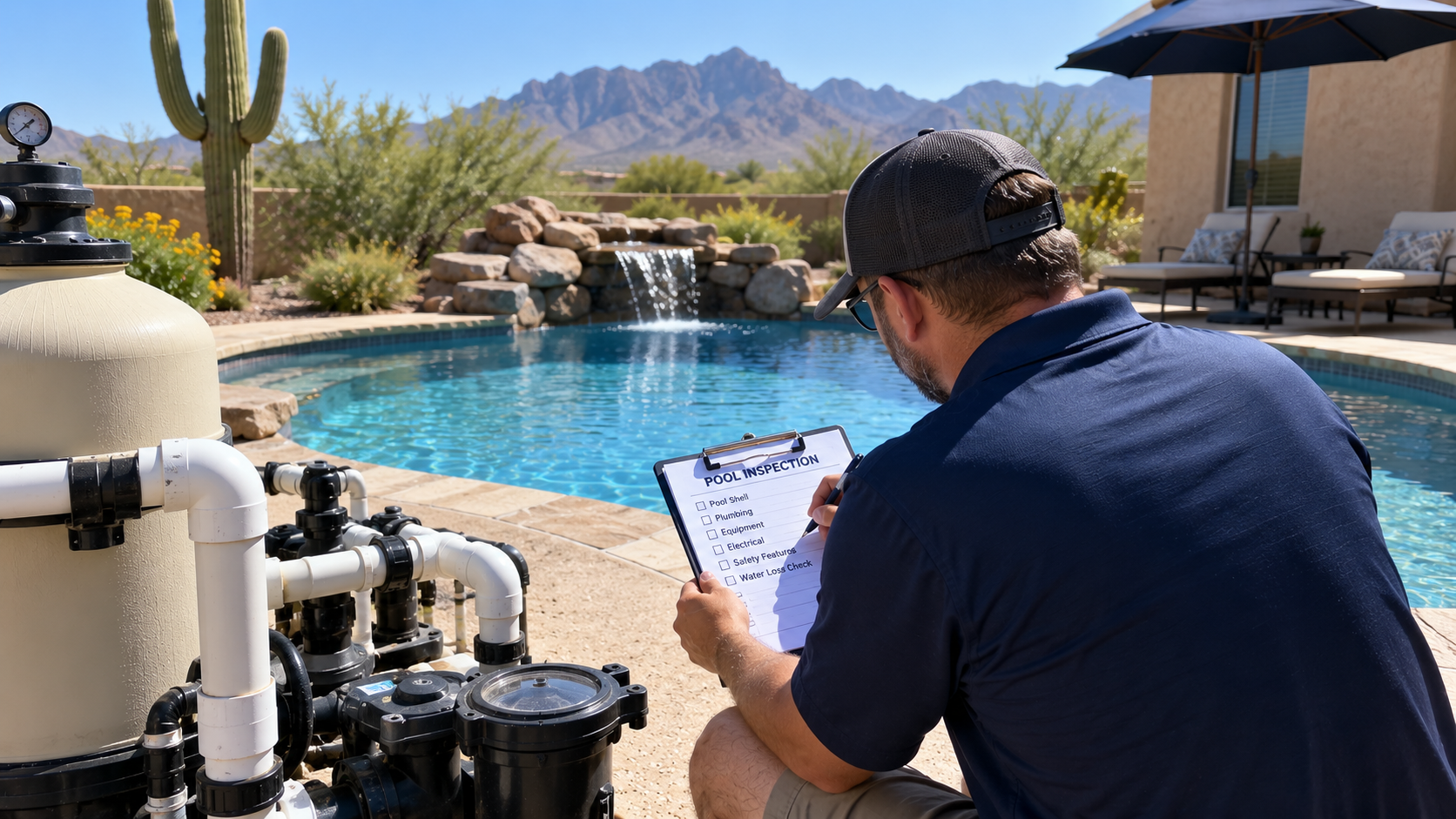
- A visual look at the equipment. We note drips around the pump, unusual noises, and filter pressure that seems off. Catching those signs early is far cheaper than an emergency repair.
The goal is simple: no buildup gets a full month to grow. Each step supports the others, which is why skipping one tends to show up fast.
Desert Algae: What It Looks Like and Why It Shows Up
Algae in our area doesn't always look like the bright green pond people picture. Often, it starts small and blends right in with the dirt. That's exactly why brushing is such a big part of every visit.
Mustard Algae Hides in Plain Sight
Mustard algae, sometimes called yellow algae, thrives in warm and sunny climates. It forms dusty yellow or tan patches, usually on the shady side of the pool. Because the color matches desert soil, many homeowners assume it's just dirt.
Here's a simple way to tell the difference. Brush the patch and watch what happens. Dirt drifts off and settles somewhere else, while mustard algae tends to reappear in the same spot within days.
Green Algae After a Storm
Green algae usually follows a monsoon storm or a stretch of extreme heat. Runoff, diluted water, and debris all show up at once. Within a few days, the water can turn hazy and then green.
A cleaning visit soon after storm season clears that debris before it feeds a bloom. In other words, timing matters as much as effort.
Why Brushing Beats Waiting
Algae clings to rough plaster, grout lines, and corners where circulation is weak. Chemicals alone struggle to reach a colony protected by a layer of dust. Brushing breaks that layer, so the sanitizer can finally do its job.
What You Can Handle Between Monthly Visits
A monthly service does the heavy lifting. Still, a few quick habits make a real difference in a dusty month. None of them take more than ten minutes.
- Skim after windy days. A pass with the net removes debris before it sinks and starts breaking down.
- Empty the skimmer basket after a dust storm. A full basket restricts flow right when the pool needs circulation most.
- Keep the pump on a steady schedule. Moving water filters dust out, while still water lets it settle and feed algae.
- Watch the water level. Desert evaporation is real, so top off the pool when the level drops below the skimmer opening.
- Trim back nearby plants. Mesquite pods, palo verde blossoms, and ornamental grasses all end up in the water eventually.
When Something Seems Off
Some problems need more than a cleaning. If the water stays cloudy after a visit, or algae keeps returning, call us before it spreads.
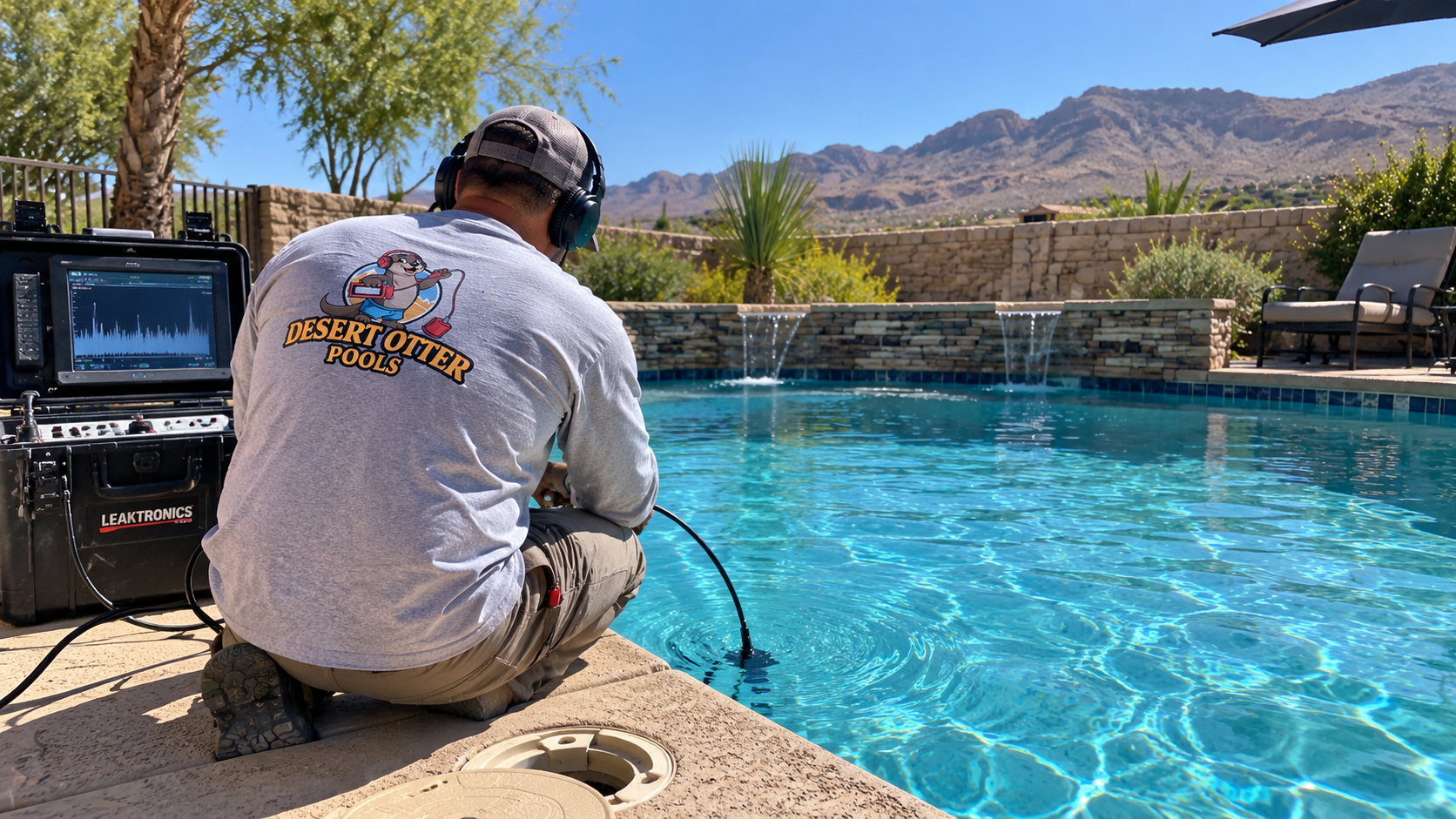
Also, pay attention if you're adding water far more often than usual. Evaporation explains a lot in our summers, but not everything. Desert Otter Pools is known for professional leak detection, so we can tell you whether that missing water is weather or a leak.
Frequently Asked Questions
Is monthly pool cleaning enough in Las Cruces?
For many residential pools, a monthly visit plus a few simple homeowner habits keeps the water in good shape. Pools near open desert, heavy landscaping, or frequent summer use may need extra attention during wind and monsoon season. Desert Otter Pools can look at your setup and recommend a schedule that fits.
Is the yellow film on my pool floor dust or algae?
It could be either, since mustard algae and desert dust look very similar. Brush the area and watch it over the next few days. If the patch returns in the same spot, it's likely algae and should be treated before it spreads.
What should I do after a dust storm?
Skim the surface, empty the skimmer basket, and let the pump run so the filter can catch suspended dust. Avoid swimming until the water looks clear again. If the pool stays cloudy, schedule a cleaning visit.
Does Desert Otter Pools offer monthly pool cleaning in El Paso?
Yes. Desert Otter Pools serves homeowners in both Las Cruces and El Paso, along with nearby communities. Contact our team to confirm service for your address.
Why is my pool losing water so fast in summer?
Evaporation is high in our hot, dry climate, especially on windy days. However, steady water loss that seems excessive can point to a leak. Desert Otter Pools provides professional leak detection, so we can find out which one you're dealing with.
Keep Dust and Algae From Getting Ahead
Desert pools don't usually fail all at once. Rather, they slip a little each windy week until the water finally turns. A steady monthly cleaning schedule stops that slide before it starts.
Ready for a pool that stays clear through wind season and monsoon storms? Book a consultation with Desert Otter Pools and we'll set up monthly pool cleaning for your Las Cruces or El Paso home.