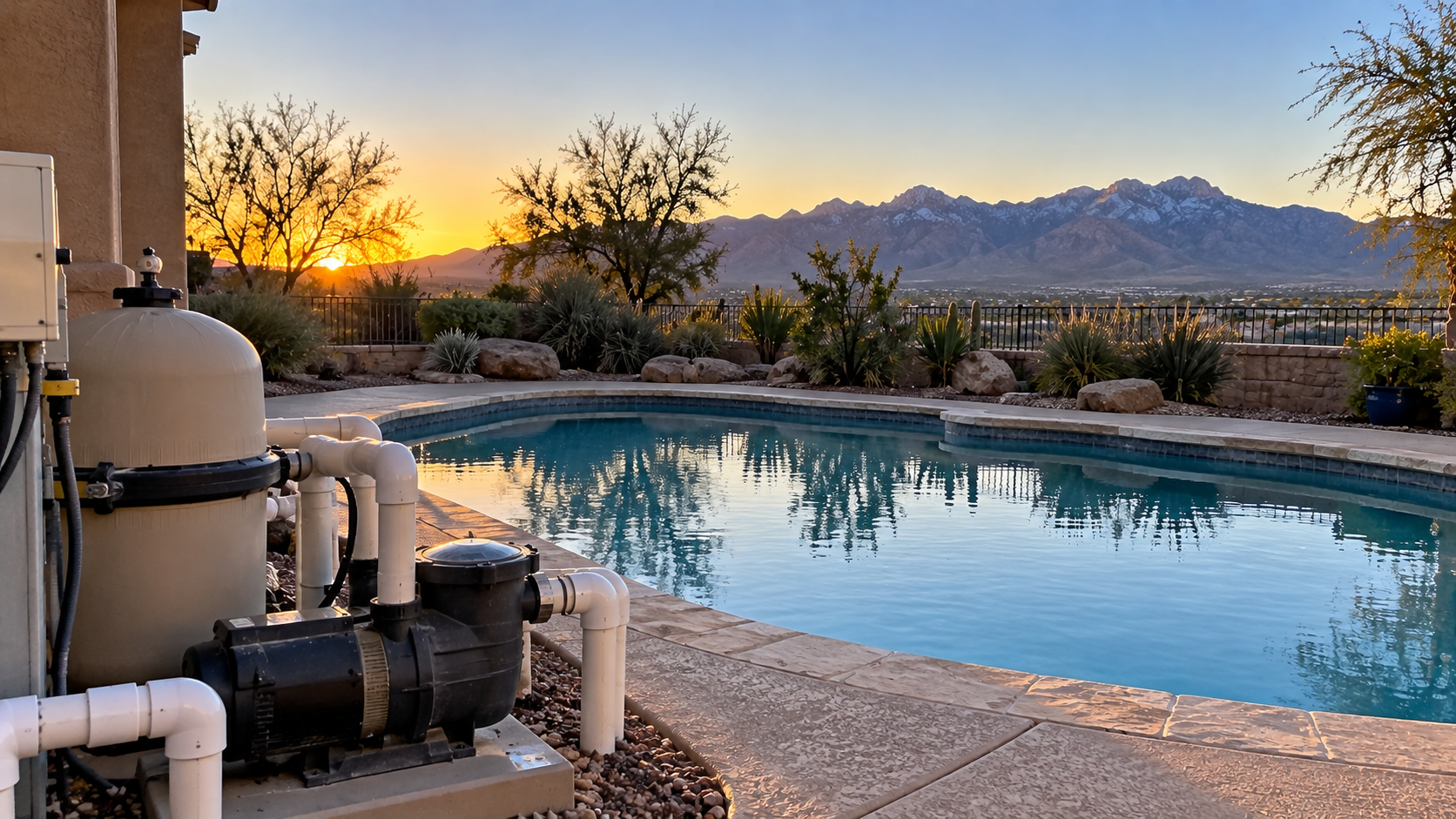
How Las Cruces pool owners can protect equipment and water before the first freeze, and what winter care involves.
Knowing how to winterize your pool in Las Cruces can save you from an ugly surprise on a cold January morning. Our winter days are often sunny and mild. However, desert nights can drop below freezing fast, and exposed pool equipment feels it first.
At Desert Otter Pools, we help homeowners across Las Cruces, El Paso, and nearby communities get their pools ready for the cold. A few simple steps before the first hard freeze can prevent cracked pumps, split pipes, and costly repairs.
This guide explains how winter affects Las Cruces pools, your options for keeping the pool open or closing it, and a checklist to finish before temperatures dip.
Why Las Cruces Pools Need Winter Prep
Many people assume a desert pool never needs freeze protection. In reality, Las Cruces sits high in the Chihuahuan Desert, and that elevation brings cold winter nights. A 60 degree afternoon can be followed by a night well below freezing.
Big Daily Temperature Swings
Dry desert air doesn't hold heat well. As a result, temperatures can fall sharply once the sun goes down. Pool water itself rarely freezes solid here, but the equipment tells a different story.
Exposed Equipment Is the Weak Point
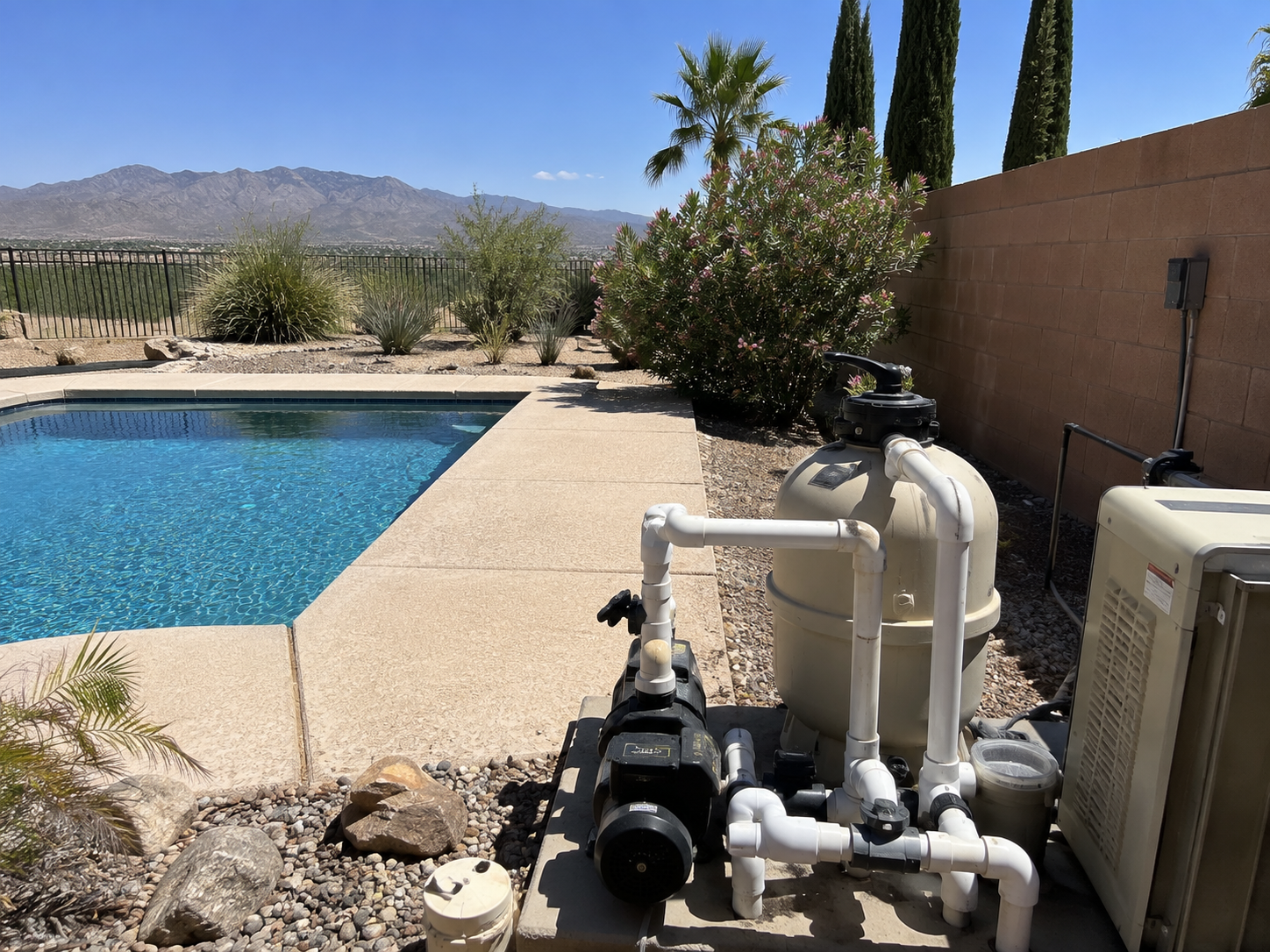
Pumps, filters, heaters, and the pipes around them usually sit above ground. Water trapped inside those parts can freeze, expand, and crack housings or fittings. One unprotected overnight freeze can damage equipment that would otherwise last for years.
The first hard freeze in southern New Mexico typically arrives in November. That makes October and early November the right time to prepare.
Close It or Keep It Running?
Las Cruces pool owners generally choose between two winter approaches. Each has trade offs, so the right choice depends on how you use your pool.
Keeping the Pool Running
Most local pools stay open through winter with a reduced pump schedule. Moving water is much less likely to freeze than water sitting still in pipes. This approach also keeps the water circulating and easier to keep clean.
The catch is that the pump must actually run during freezing hours. That usually means a freeze sensor or a pump with built in freeze protection.
Partially Closing the Pool
Some homeowners prefer to lower the water level, drain the equipment, and cover the pool. This works well for pools that won't be used at all for several months. However, a closed pool still needs periodic checks, since leaves, dust, and algae don't take the winter off.
For many Las Cruces households, keeping the pool running with proper freeze protection is the simpler option. Our team can help you decide which approach fits your setup.
Protecting Your Equipment From Freezes
Your equipment pad deserves the most attention before winter. Here is where we focus on every pre freeze visit.
Freeze Protection Settings
Many modern variable speed pumps and automation systems include a freeze protection mode. When the air temperature drops near freezing, the system turns the pump on automatically. Check that this feature is enabled and actually working, not just installed.
Older single speed systems may need a separate freeze sensor added. Without one, a timer set for daytime hours leaves the pipes sitting still on the coldest nights.
Exposed Pipes and Valves
Above ground plumbing is the most vulnerable spot. Insulating exposed pipes adds a helpful layer of protection. Also inspect valves and unions for small drips, since even a slow leak can freeze and widen a crack.
Heaters and Power Outages
Heaters contain water that can freeze when the system shuts down. In addition, a power outage on a cold night stops freeze protection entirely. If the power goes out during a freeze, it is worth having a plan to drain vulnerable equipment until service returns.
Winter Water Care in Las Cruces
Cold water slows algae growth, but it doesn't stop it. Your pool still needs regular attention through the winter months.
Keep Chemistry Balanced
Sanitizer demand drops when the water cools. Even so, pH and alkalinity can still drift. Balanced water protects plaster and equipment just as much in January as it does in July. Testing every week or two during winter is a reasonable rhythm for most pools.
Stay on Top of Debris
Winter winds carry dust, leaves, and tumbleweeds into backyard pools. That debris sinks, breaks down, and feeds algae once the water warms in spring. Regular skimming and emptying the baskets keeps that cleanup small.
Consider a Cover
A cover reduces debris and slows heat loss on cold nights. Solar covers can also help hold daytime warmth for owners who like to swim on mild afternoons. Just clear dust and debris off the cover after windy days.
Your Las Cruces Pre Freeze Checklist
Work through this list before the first hard freeze of the season:
- Confirm freeze protection is on and test that the pump starts when it should
- Inspect the equipment pad for drips, cracked fittings, or worn seals
- Insulate exposed pipes and valves where possible
- Adjust your pump schedule for shorter winter run times
- Balance the water chemistry before temperatures drop
- Clean the filter so water moves freely all winter
- Plan for power outages, including how to drain equipment if needed
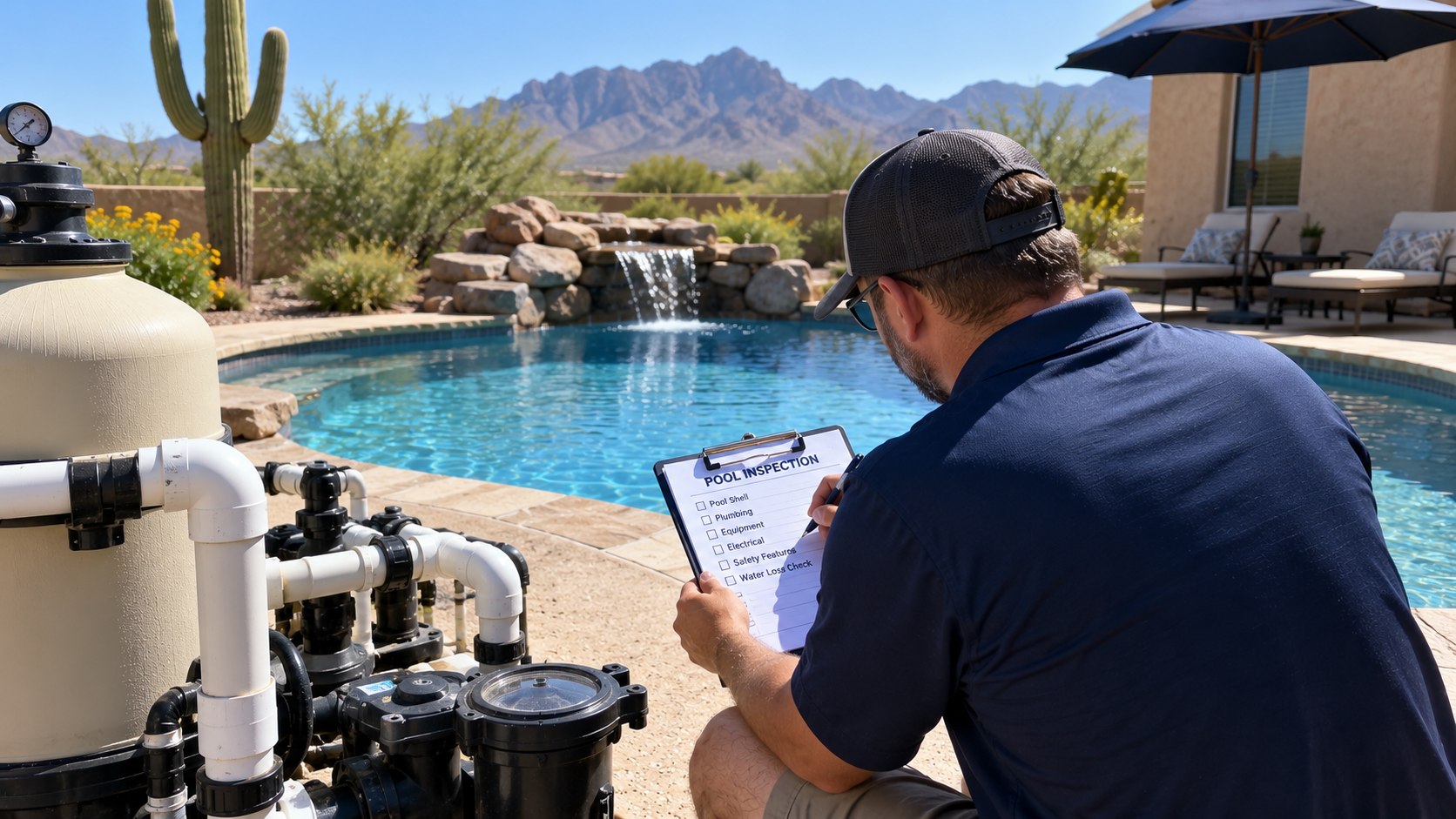
- Schedule a pool inspection if your equipment is older or hasn't been checked recently
Here is something we see every winter. A homeowner sets the timer to run only in the afternoon to save energy. Then a cold snap hits overnight, and the pump never turns on when the pipes need it most.
Winter Pool Care FAQ
Do I need to winterize my pool in Las Cruces?
Most Las Cruces pools don't need a full northern style closing. However, they do need freeze protection, because desert nights regularly drop below freezing. Protecting the pump, filter, heater, and exposed pipes is the priority.
Should I run my pool pump when it freezes?
Yes. Moving water is far less likely to freeze inside pipes and equipment. A freeze sensor or built in freeze protection mode can turn the pump on automatically when temperatures drop.
Can I leave my pool open all winter?
Many Las Cruces homeowners do. With freeze protection, a reduced pump schedule, and regular chemistry checks, an open pool can stay in good shape through winter.
What happens if my pool equipment freezes?
Frozen water expands and can crack pump housings, filters, heaters, and fittings. Damage may not show until the system restarts and starts leaking. If you suspect a freeze, have the equipment inspected before running it normally.
Which areas does Desert Otter Pools serve?
Desert Otter Pools serves Las Cruces, El Paso, Sunland Park, Anthony, Chaparral, Horizon City, Deming, Alamogordo, and nearby communities. Contact the team to confirm service for your address.
Get Your Pool Ready Before the First Freeze
A little preparation now prevents a lot of frustration later. Las Cruces winters are mild most of the time, but one cold night is all it takes to crack a pump. Freeze protection costs far less than replacing damaged equipment.
Desert Otter Pools helps homeowners across Las Cruces and El Paso get pools ready for winter. Book a consultation today, and let our team check your equipment before the cold arrives.