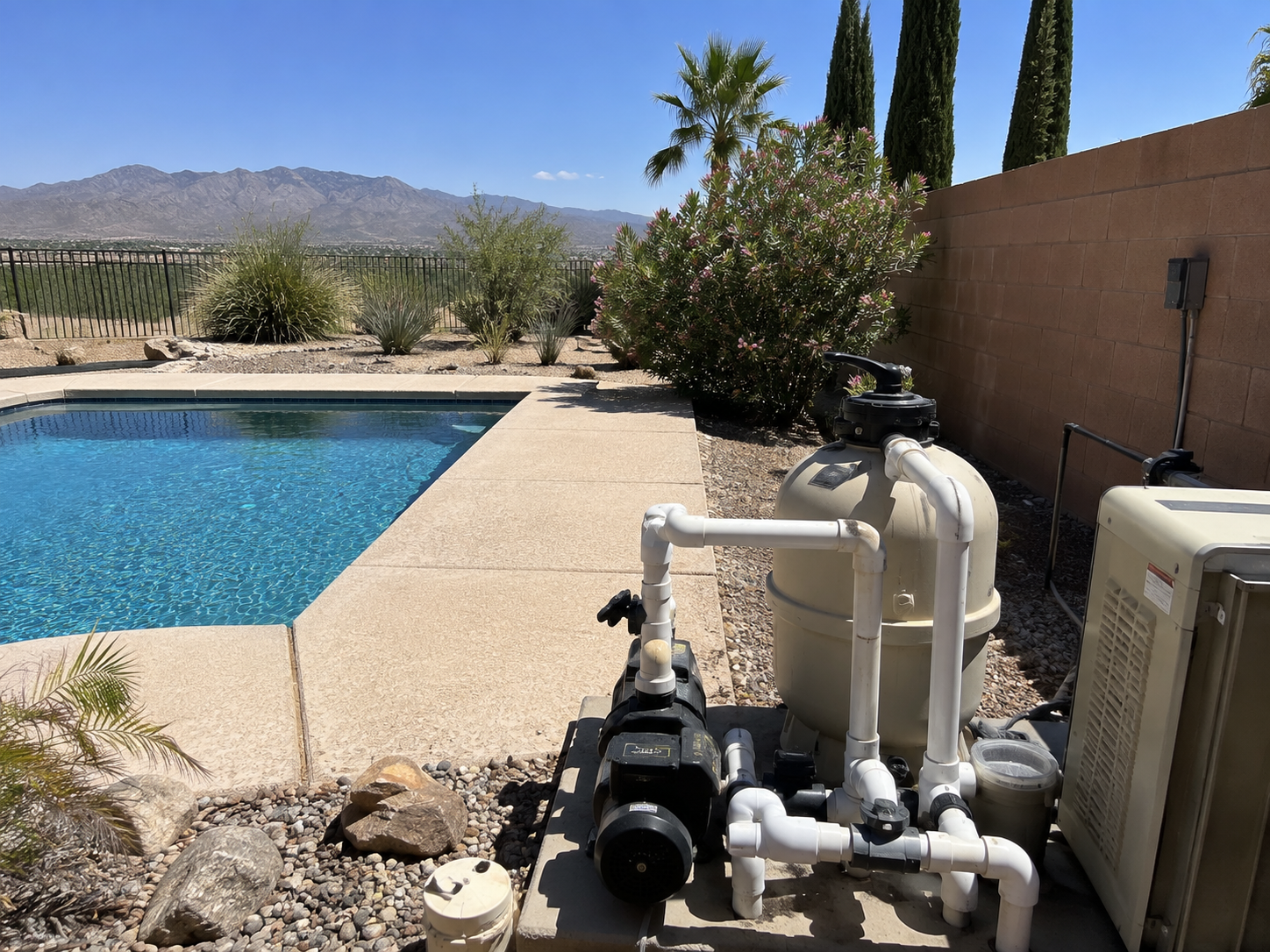
Desert heat pushes pool pumps and filters harder in Las Cruces. Learn what causes early motor failure and how to protect your equipment this summer.
If you have ever touched your pool equipment pad on a July afternoon in Las Cruces, you already know the answer. The plastic housing is hot enough to make you flinch, the motor is humming louder than it did in April, and somewhere in the back of your mind you are wondering if that sound is normal. At Desert Otter Pools, this is the exact question we get asked most during the summer months. Pool equipment maintenance in desert heat is not the same conversation you would have with a pool company in Ohio or Florida, and pretending otherwise is how equipment fails early.
Las Cruces sits in a stretch of desert where triple digit days can run for weeks at a time. That kind of heat does not just make swimming feel better. It changes how fast your water evaporates, how hard your pump has to work, and how quickly rubber seals and electrical components break down. Understanding that relationship is the difference between a pool system that lasts twelve years and one that needs a new motor every three.
How Desert Heat Actually Stresses Pool Equipment
Most homeowners assume heat only affects the water. In reality, it is the equipment that takes the bigger hit. Pump motors are designed to run within a certain temperature range, and when the ambient air around the equipment pad climbs past 100 degrees, the motor has less room to cool itself during normal operation.
This matters because motors do not fail all at once. They degrade slowly, and the damage compounds. A motor that runs hotter than it should for months will show it eventually, usually as a bearing failure or a burned out capacitor, and usually at the worst possible time, like the middle of August when you actually need the pool.
Heat also affects the smaller parts people forget about. O rings and gaskets are made of rubber or synthetic compounds that dry out and crack faster under constant sun and high temperatures. We see this constantly on service calls. A pump that was sealed perfectly fine in March starts weeping water by July because the gasket has hardened just enough to lose its seal.
Evaporation Changes Your Chemical Balance Faster Than You Think
In desert heat, a pool can lose a quarter inch of water or more per day just to evaporation, sometimes higher if there is any wind involved, which in southern New Mexico is often. That water loss concentrates whatever chemicals are left behind, which throws off your balance even if you have not added anything new.
Unbalanced water is hard on equipment, not just swimmers. Water that skews too acidic will slowly corrode metal components inside the pump and heater. Water that runs too high in calcium leaves scale buildup inside pipes and filters, which forces the pump to push water through a narrowing path. Either direction adds strain that a pool owner in a milder climate simply does not deal with as often.
This is part of why we tell clients that summer testing needs to happen more frequently than the label on your test kit suggests. Twice a week is a reasonable minimum once the heat sets in.
Your Filter System Works Overtime Too
A sand or cartridge filter clogs faster in the desert for a simple reason: more people are swimming, more dust and pollen is blowing around, and the pool is running longer hours to keep up with evaporation and heat load. All of that debris has to pass through the filter.
When a filter gets clogged, the pump has to generate more pressure to push water through it. That added resistance is one of the most common reasons we see premature motor wear in this region. A filter that should be cleaned every three to four weeks in spring might need attention every ten days once we hit peak summer.
Signs Your Filter Needs Attention
- Pressure gauge reading 8 to 10 psi above the clean, startup reading
- Reduced water flow at the returns
- Water that looks slightly cloudy despite normal chemical levels
- Pump cycling on and off more than usual
Why Shade and Equipment Placement Matter More Than People Realize
We have walked onto more than a few properties in Las Cruces where the pool equipment sits in direct afternoon sun with zero cover, baking for six or seven hours straight. It works, technically, but it is the equivalent of running a car engine in a desert with the hood popped open in the sun rather than parked in a garage.
A simple shade structure, even something as basic as a angled awning or a well placed piece of lattice, can drop the ambient temperature around the equipment pad by a noticeable margin. That lower temperature gives the motor more thermal headroom, which translates directly into a longer service life. This is one of the lowest cost upgrades a homeowner can make, and it is something we bring up during almost every equipment inspection.
Running Times Need to Shift With the Season
A lot of pool owners keep their pump on the same schedule year round, usually because that is how it was set when the system was installed. In desert heat, that schedule is almost always wrong by summer.
Algae and bacteria grow faster in warm water, and warmer air temperatures mean warmer pool water, sometimes uncomfortably warm by August. That means your filtration cycle needs to run longer to keep up, generally somewhere in the range of eight to twelve hours a day during peak summer, compared to four to six hours in cooler months.
Running the pump during the coolest parts of the day, early morning or overnight, also reduces strain compared to running it during the hottest afternoon hours. It is a small adjustment, but over a full season it adds up in both equipment longevity and energy cost.
What Regular Professional Maintenance Actually Catches
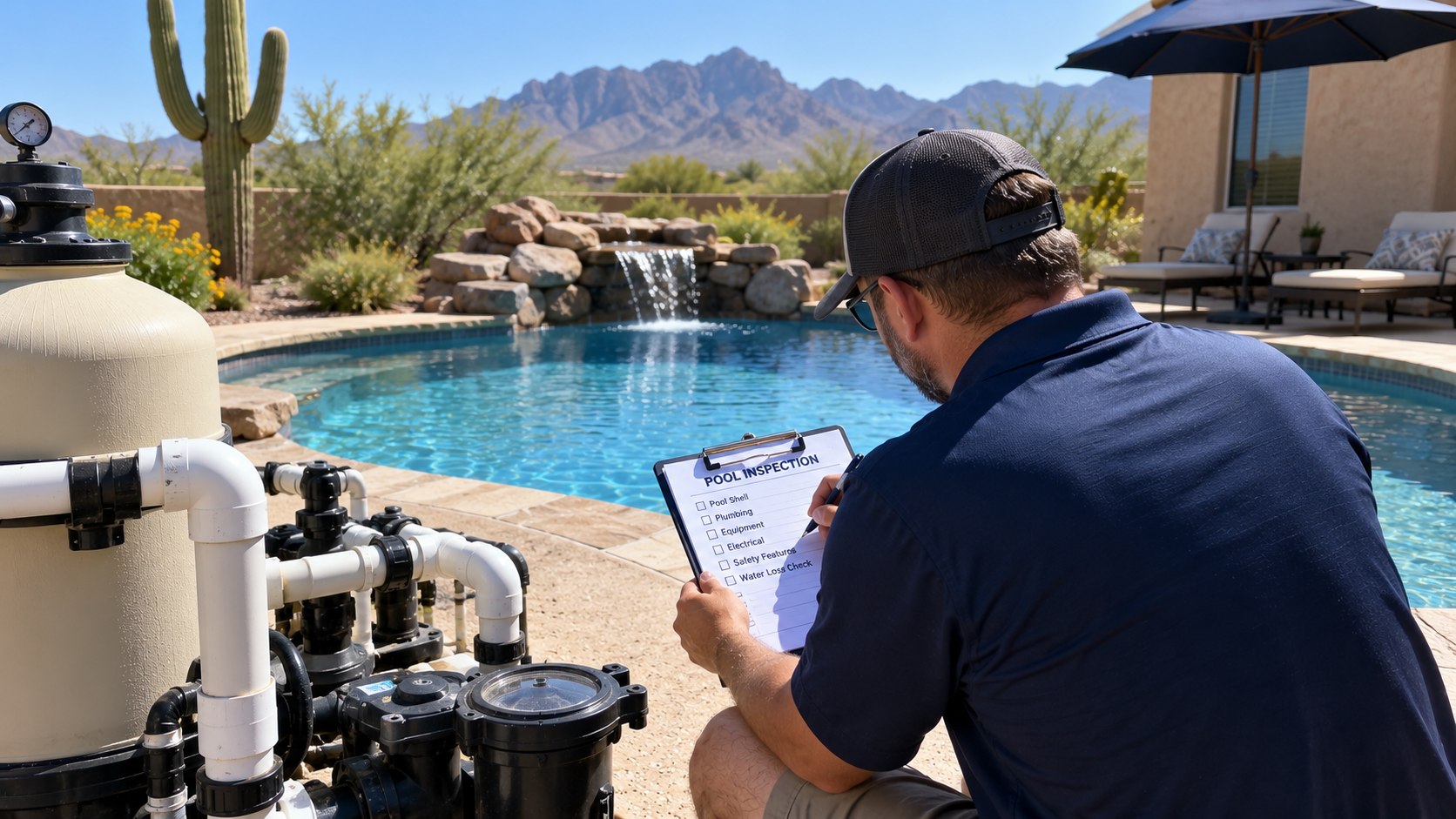
A homeowner checking their pressure gauge and skimmer basket is genuinely useful, and we encourage it. But there are things that only show up during a hands on inspection. Bearing wear inside a motor has a distinct sound before it becomes a full failure. A capacitor starting to weaken shows subtle signs in startup performance before it dies completely. Heater components corroding from chemical imbalance often show visible signs on the housing before there is a functional problem.
Catching these issues early is almost always cheaper than replacing a motor or heater outright. At Desert Otter Pools, our technicians are checking these exact wear points every time we service a Las Cruces property, because we know what desert heat does to equipment that other regions never have to think about.
Frequently Asked Questions
How often should I have my pool pump serviced in Las Cruces?
Most pools in our area benefit from a professional inspection every three to four months, with more frequent checks during the peak summer season when equipment is under the heaviest load. Homes with older equipment or heavy pool usage may need more frequent visits.
Why does my pool pump sound louder in the summer?
A louder pump in summer usually points to increased motor strain from heat, a clogged filter forcing the motor to work harder, or early bearing wear. It is worth having it checked before the noise turns into a full failure, especially during peak swim season.
How much water does a pool lose to evaporation in the desert?
In Las Cruces summer conditions, a pool can lose a quarter inch of water or more each day, sometimes higher with wind. That water loss concentrates chemicals and requires more frequent testing and top off than pool owners in milder climates typically expect.
Does shading my pool equipment actually make a difference?
Yes. Direct sun exposure on an equipment pad for six or more hours a day adds real heat stress to motors and electrical components. Even basic shade coverage can meaningfully extend the life of your pump and other equipment.
Should I run my pool pump longer in summer than in winter?
Generally yes. Most pools need eight to twelve hours of filtration daily during peak summer heat, compared to four to six hours in cooler months, because warmer water encourages faster algae and bacteria growth.
What is the most common equipment failure you see in desert heat?
Motor bearing failure and capacitor burnout are the two most common issues we encounter, both accelerated by sustained high temperatures and equipment that is not shaded or properly maintained.
Keeping Your Pool Running Through Another Las Cruces Summer
Desert heat is simply a different set of conditions than most pool maintenance advice is written for. What works for a pool in a temperate climate does not always hold up once temperatures climb into the triple digits for weeks on end. Understanding how your equipment responds to that heat, and adjusting maintenance habits accordingly, is what keeps a pool system running smoothly year after year.
If your equipment has been sounding a little off, running longer than it used to, or you just want a second set of eyes on your setup before the next heat wave hits, Desert Otter Pools is here to help. Reach out to schedule a consultation and let us take a look at what your system needs to handle another Las Cruces summer.