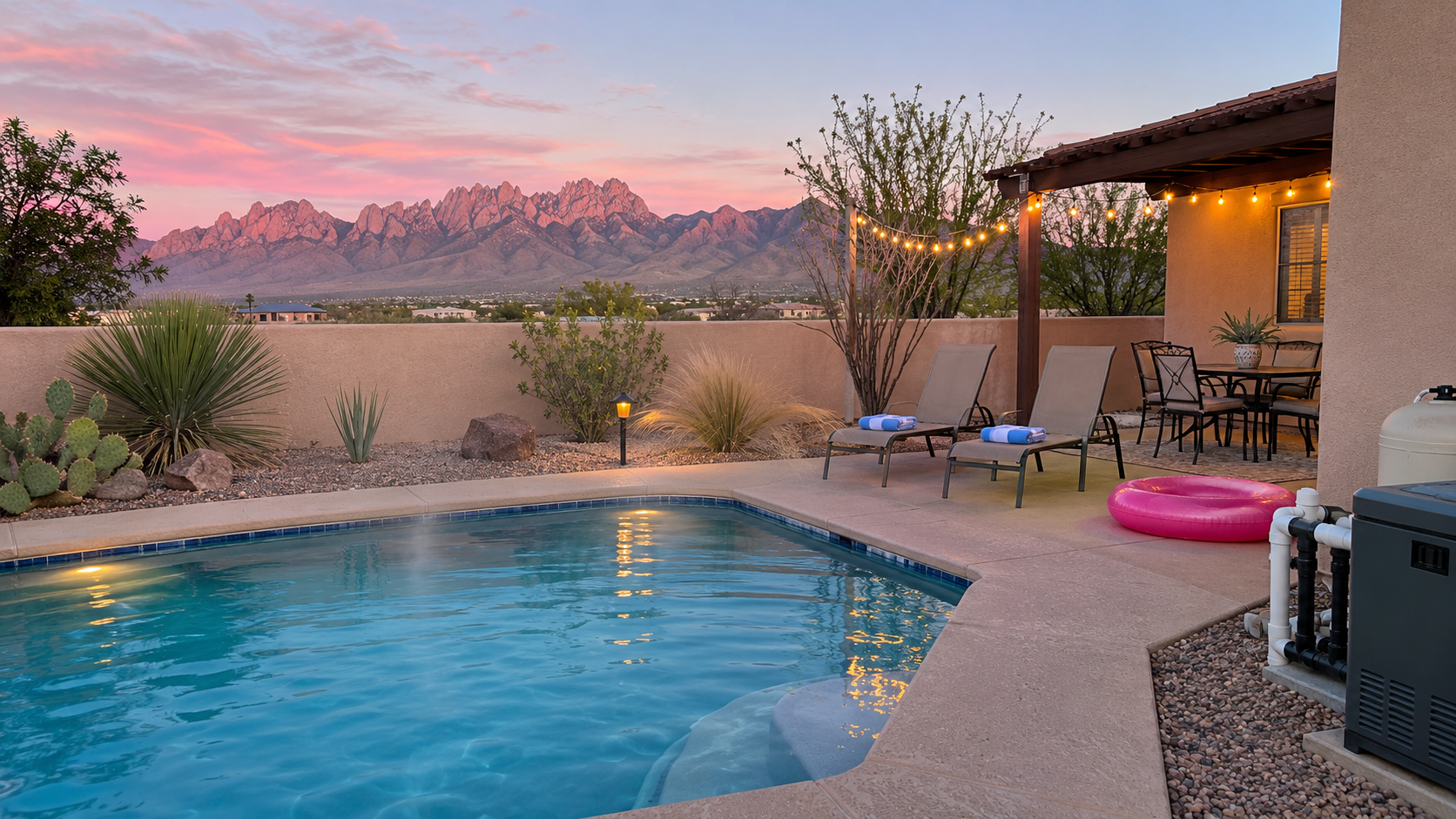
Compare pool heater options for Las Cruces desert nights and learn how to extend your swim season.
The afternoon sun in Las Cruces can make the pool look perfect. Then the sun goes down, the air cools fast, and the kids are climbing out shivering before dinner. If you want more swim days from your pool, choosing the right pool heater in Las Cruces is the simplest way to get them.
Desert Otter Pools is a fully insured local pool company serving Las Cruces and the surrounding area. Our team repairs, replaces, installs, and maintains pool heaters along with the rest of your equipment. This guide walks through your heater options, what matters in our desert climate, and how to keep a heater running season after season.
Why Las Cruces Pools Cool Down So Fast
Las Cruces sits high in the Chihuahuan Desert. That elevation brings beautiful sunny days, but it also brings cool nights.
Here's the catch. Dry desert air loses heat quickly. A warm afternoon can give way to a surprisingly chilly evening, and your pool water loses heat right along with it.
That swing is why so many local pool owners feel their swim season is shorter than it should be. A heater evens out those swings, so the water stays comfortable when the air doesn't.
The Main Types of Pool Heaters
There's no single best heater for every pool. The right choice depends on how you swim, when you swim, and what your setup can support. Here's a plain look at the main types.
Gas Heaters
Gas heaters burn natural gas or propane to warm the water. Their biggest advantage is speed. They can bring water up to temperature relatively quickly, and they work regardless of the air temperature outside.
That makes gas a good fit for owners who swim on demand. For example, if you only heat the pool for weekend gatherings or a spa session, fast heat matters more than anything else.
Heat Pumps
A heat pump pulls warmth from the surrounding air and transfers it into the water. Rather than creating heat from fuel, it moves heat that's already there.
Heat pumps work best when the air is warm. They're great for stretching the season on either end, but they slow down on the coldest nights. If you want steady, maintained warmth through the milder months, a heat pump is worth a serious look.
Solar Heaters
Solar heaters circulate pool water through collectors that soak up heat from the sun. In a place with as much sunshine as Las Cruces, that's an appealing idea.
Solar depends on the weather, though. Cloudy stretches and short winter days limit what it can do. Many owners see solar as a way to take the edge off cool water, rather than a way to heat on demand.
How to Choose the Right Heater for Your Pool
Picking a heater comes down to a few honest questions. Answer these before you buy anything:
- When do you actually swim? Evenings, weekends, or every day?
- How warm do you want the water? A little warmer, or truly warm?
- How fast do you need heat? On demand, or steady over time?
- What does your equipment pad support? Gas lines, electrical capacity, and space all matter.
- Do you have a spa? Spas often call for quicker heating than a pool alone.
There's no shame in mixing approaches, either. Some owners pair one heater type with good habits that hold heat longer. Our honest opinion: buy the heater that fits how your family swims, not the one with the longest feature list.
Why Professional Installation Matters
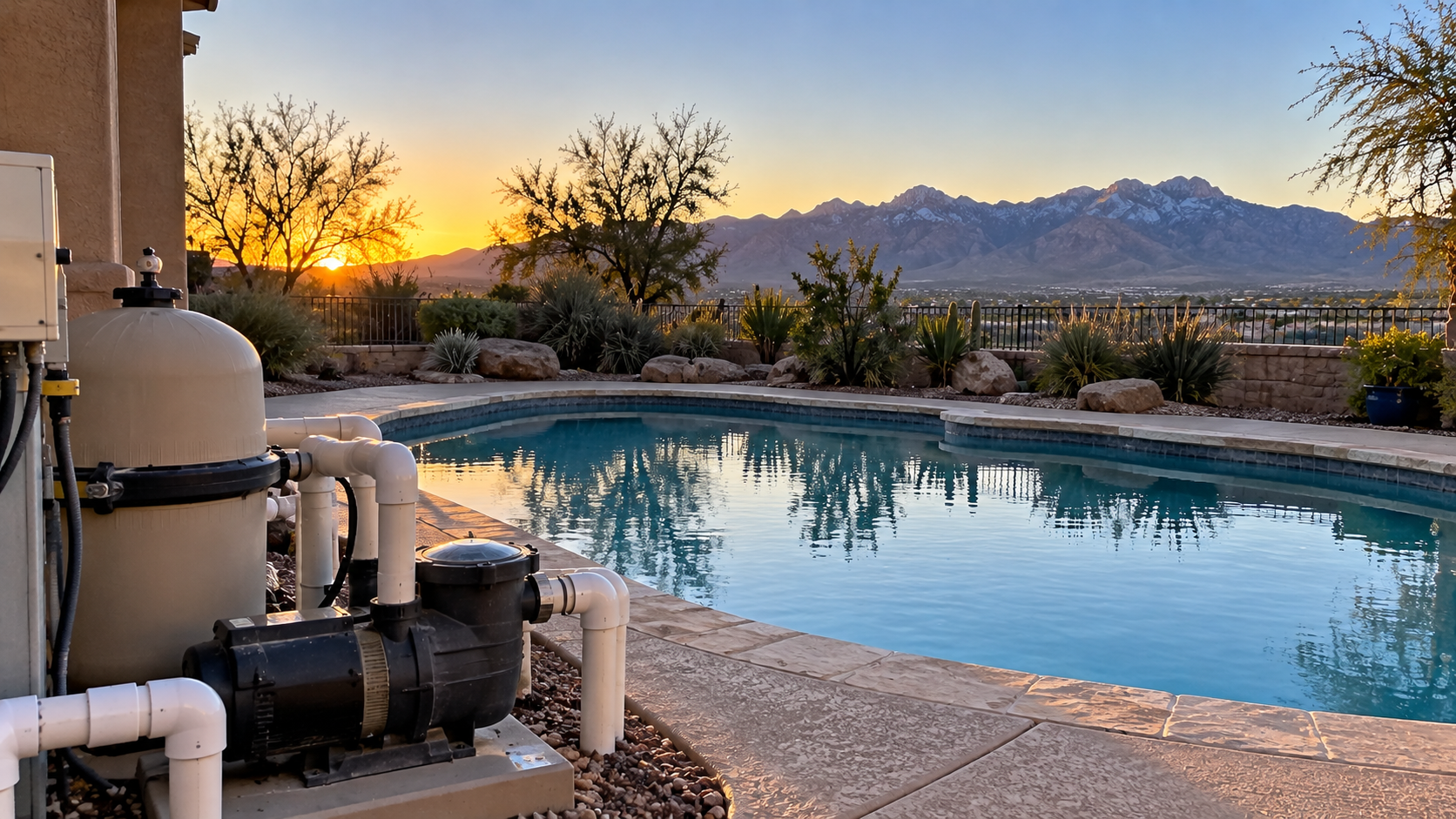
A heater is more than a box on the equipment pad. It connects to your plumbing, your electrical system, and in many cases a gas line. Each of those connections has to be right for the heater to work safely and reliably.
That's where experience counts. Our team handles plumbing repair, electrical repair and diagnostics, and equipment installation, so we look at the whole system rather than just the new unit. As a result, your heater fits the setup you already have.
Simple Ways to Hold Heat Longer
A heater works harder when the water is losing heat as fast as it gains it. In dry desert air, that happens easily. A few habits help:
- Use a pool cover at night. It slows the heat loss that comes with cool desert evenings.
- Keep your equipment in good shape. A struggling pump or dirty filter affects how well water moves through the heater.
- Watch your water chemistry. Balanced water is easier on heater components.
Our post on pool water chemistry basics for Las Cruces desert pools covers that last point in detail.
Signs Your Pool Heater Needs Repair
Even a good heater needs attention eventually. Call a technician if you notice any of these:
- The water won't reach your set temperature
- The heater cycles on and off more than it used to
- Strange noises from the unit
- Error codes on the display
- Water leaking around the heater
- The heater won't start at all
Faulty heaters are one of the common issues we handle. Our team repairs or replaces heaters, pumps, filters, and other equipment. Learn more on our pool service page.
Your heater also depends on the pump moving water through it. If your pump is struggling, read why your pool pump works harder in Las Cruces than almost anywhere else.
Don't Forget Winter Protection
Here's something many owners miss. Heaters hold water inside them, and that water can freeze when the system shuts down. Freezing water expands, and it can crack housings and fittings.
A power outage during a cold night can stop freeze protection entirely. That's why it's smart to have a plan for draining vulnerable equipment until power returns. Our guide to winter pool care in Las Cruces explains how to protect your heater and the rest of your equipment.
How Desert Otter Helps With Pool Heaters
Whether you're adding your first heater or fixing the one you have, we can help. Our services include:
- Heater installation as part of new equipment installs
- Heater repair and replacement
- Heater inspection and maintenance through our pool maintenance service
- Seasonal openings and closings, including winterizing
Thinking about buying a home with a heated pool? A professional pool inspection checks the equipment before you commit.
Frequently Asked Questions
What type of pool heater is best for Las Cruces?
It depends on how you use your pool. Gas heaters warm water quickly and work regardless of air temperature, heat pumps work well for stretching the season when the air is warm, and solar heaters use the sun to take the edge off cool water. Desert Otter Pools can help you weigh the options based on your pool and swimming habits.
Does Desert Otter Pools install pool heaters?
Yes. Desert Otter Pools installs new pool equipment, including heaters. We also repair and replace existing heaters, pumps, filters, and other pool equipment.
Why does my pool get cold so fast at night in Las Cruces?
Las Cruces sits high in the Chihuahuan Desert, and dry air loses heat quickly. Warm afternoons can be followed by cool evenings, and pool water loses heat along with the air. A pool cover and a properly sized heater help hold the warmth longer.
How do I protect my pool heater in the winter?
Heaters hold water that can freeze and crack internal parts when the system shuts down. Keep water moving during freezes, use freeze protection if your system has it, and have a plan to drain vulnerable equipment during a power outage. Desert Otter can winterize your pool and equipment.
What are signs my pool heater needs repair?
Common signs include water that won't reach the set temperature, frequent cycling, strange noises, error codes, leaks around the unit, or a heater that won't start. If you notice any of these, schedule a service visit before the problem grows.
Your pool shouldn't sit empty just because the evenings cool off. Call Desert Otter Pools at (575) 219-8420 or reach out online to book a consultation, and let's find the right way to heat your Las Cruces pool and stretch your swim season.